
When a natural disaster displaces families, emergency housing must address more than the immediate need for shelter. It must provide a safe, private and dignified environment where families can recover while communities begin rebuilding.
Following the seismic emergency in Venezuela, the United Nations Development Programme (UNDP) initiated a market exploration for rapidly deployable transitional family accommodation and dignified shelter solutions.
Working alongside our project partner, Nestron developed a modular housing proposal designed around the requirements of this humanitarian initiative, with a focus on rapid deployment, transportation efficiency, climate adaptability and comfortable day-to-day living.
The project is currently ongoing.
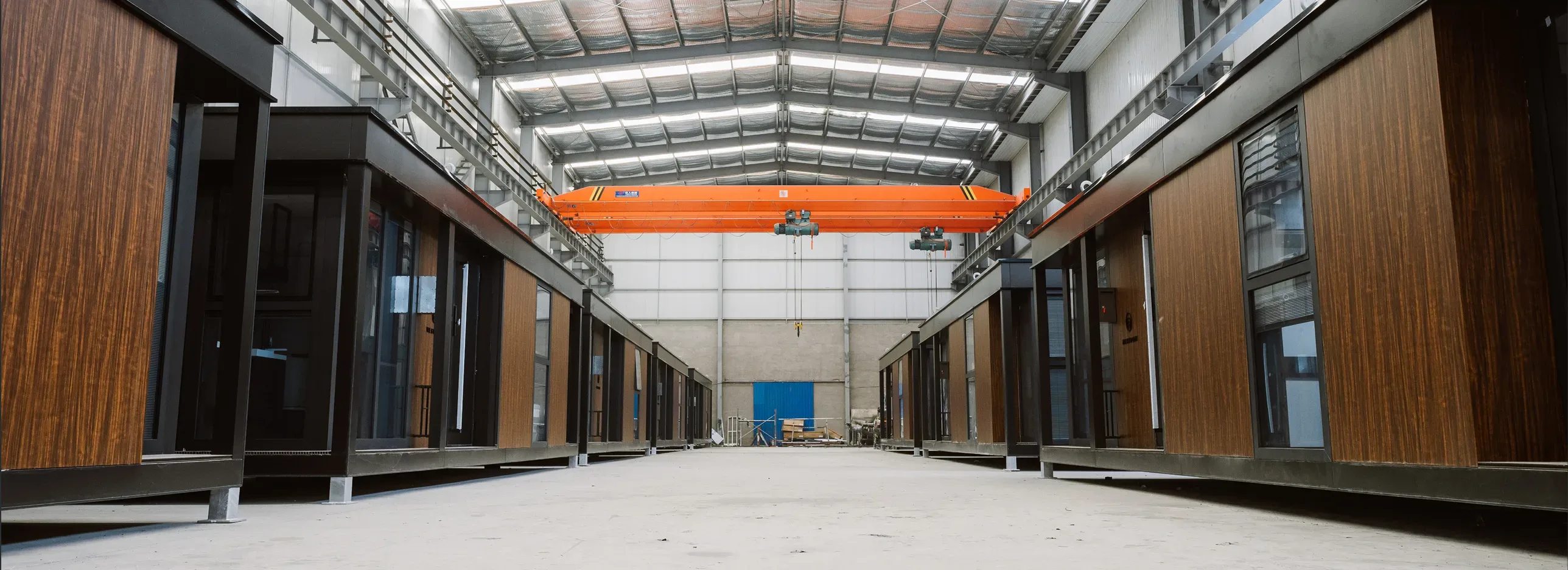
Project highlights
Client Transitional Family Accommodation & Dignified Shelter Initiative
Location Venezuela
Status On going
Project type Emergency & Disaster Relief Housing
Application Emergency & Disaster Relief Housing
Housing Solution Prefabricated Modular Housing
Construction method Off-Site Modular Construction
Deployment approach Off-Site Manufacturing + Transport + On-Site Installation Coordination with Local Contractor
Primary Challenge Rapidly deploying safe and dignified housing following a major disaster
Project objective Support disaster recovery with scalable transitional housing that can provide families with more than basic emergency shelter
The challenge
Following a major natural disaster, communities can face the loss of homes at the same time that local construction capacity, infrastructure and supply chains are under significant pressure.
The challenge is therefore not simply to build replacement housing.
Humanitarian and disaster recovery organizations need solutions that can be deployed quickly, transported efficiently and installed across affected communities while responding to local climatic, seismic and infrastructure conditions.
For families, the requirements are equally important.
Temporary accommodation may become home for months while permanent reconstruction progresses. Privacy, sanitation, protection from the weather and the ability to maintain normal daily routines all contribute to a more dignified recovery environment.
The project therefore called for a solution capable of addressing several priorities:
- Rapid deployment following a disaster
- Prefabricated or modular construction
- Efficient transportation to affected areas
- Adaptability to seismic, climatic and hydrometeorological conditions
- Reduced dependence on extensive on-site construction
- Essential facilities for everyday family life
- A scalable approach suitable for wider humanitarian deployment
The solution
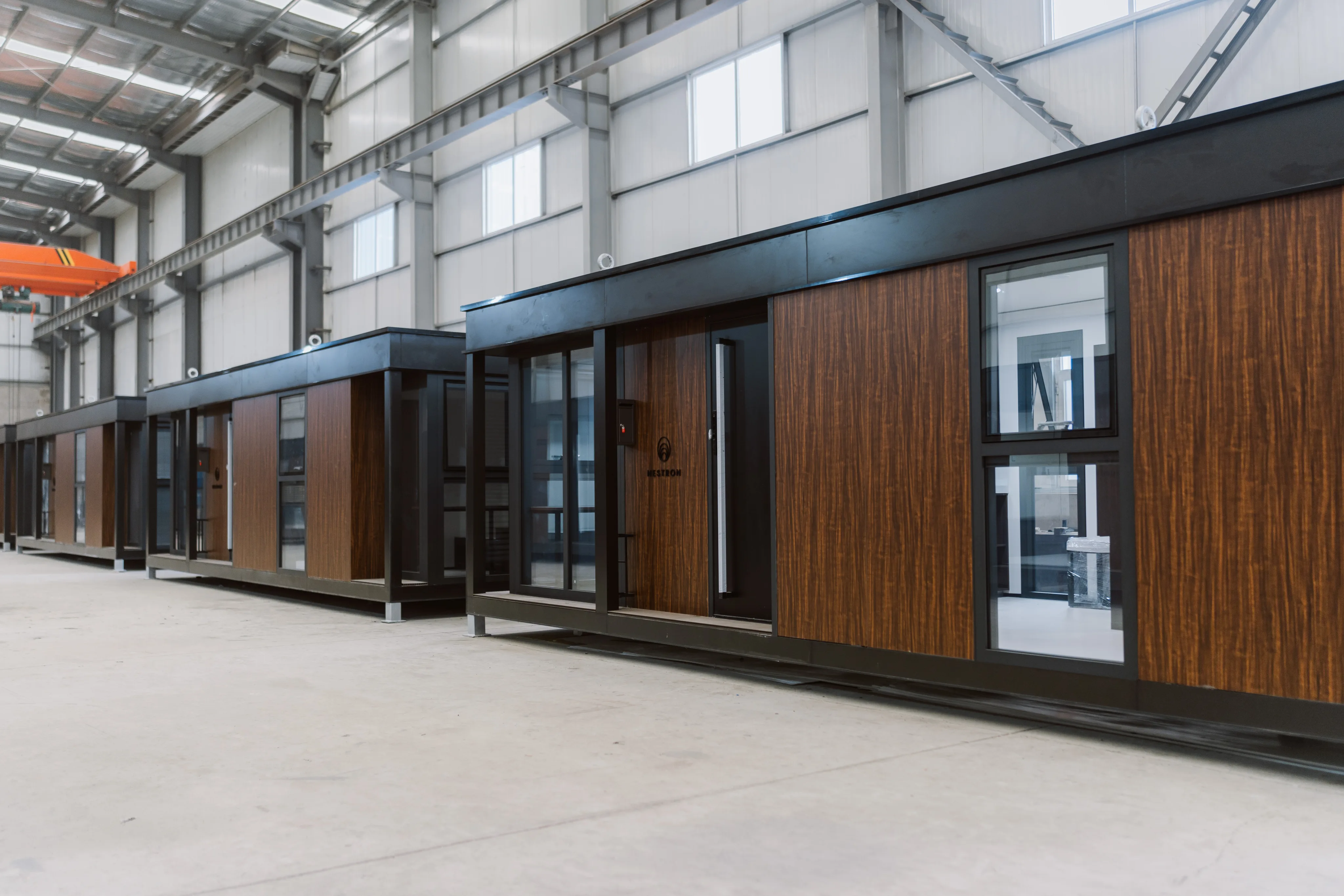
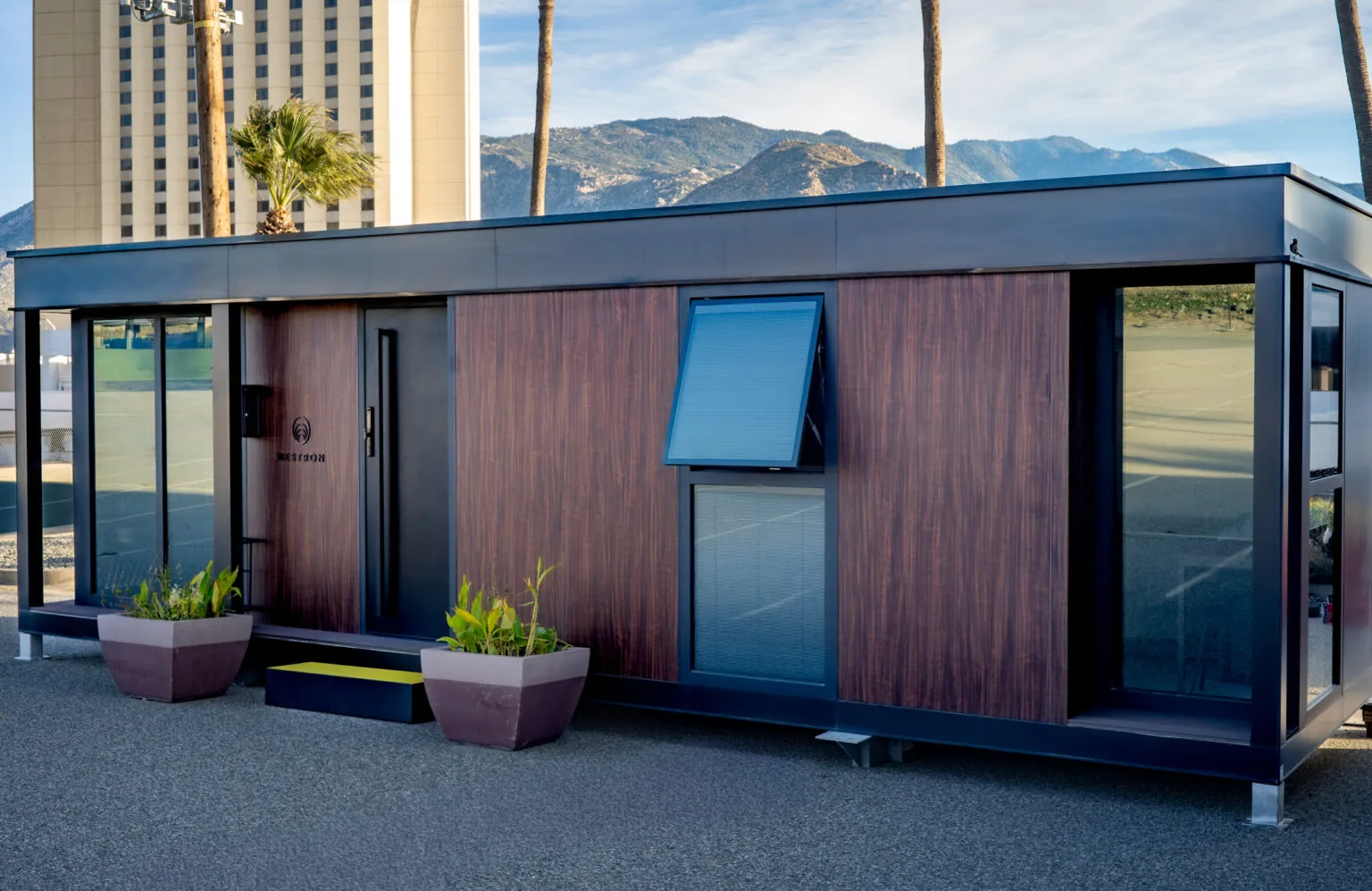
Nestron’s approach centers on factory-built modular housing that arrives with much of the living environment already integrated into the unit.
Rather than treating emergency accommodation as basic shelter alone, the proposed solution is designed around the idea of dignified transitional living.
Each home can incorporate the essential spaces and systems needed for everyday family life, including sleeping areas, a bathroom, kitchen facilities, climate control and utility connections.
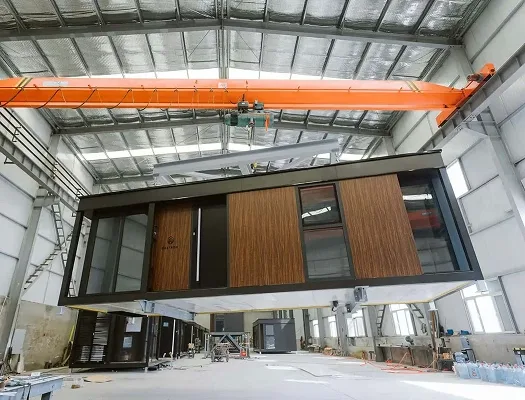
By completing a substantial portion of construction and interior integration before the unit reaches the deployment area, the approach can reduce the amount of work that must take place at a disaster-affected site.
The objective is to bridge the gap between emergency shelter and permanent reconstruction with housing that can support families through the transitional recovery period.
Designed for dignified recovery
Speed is critical in disaster response, but the quality of the living environment also matters.
People displaced by disasters may already have experienced the loss of their homes, belongings and familiar surroundings. Transitional housing should therefore help restore a degree of privacy, stability and independence.
Nestron’s proposed approach prioritizes a self-contained living environment where families can sleep, prepare food, maintain personal hygiene and carry out ordinary daily activities within their own space.
This philosophy forms an important part of our approach to humanitarian housing:
Rapid deployment should not require sacrificing dignity.
By combining prefabricated construction with a complete residential environment, modular housing can provide disaster-affected families with a more stable place to live while longer-term reconstruction takes place.
Implementation
The project is currently in progress and remains subject to the applicable institutional evaluation and procurement processes.
Nestron and its project partner have been working on the technical, logistical and commercial considerations required for potential deployment in Venezuela.
Planning considerations include:
- Housing configuration and family accommodation requirements
- Manufacturing capacity and production planning
- International transportation
- Potential off-grid utility connection(s)
- Installation strategy
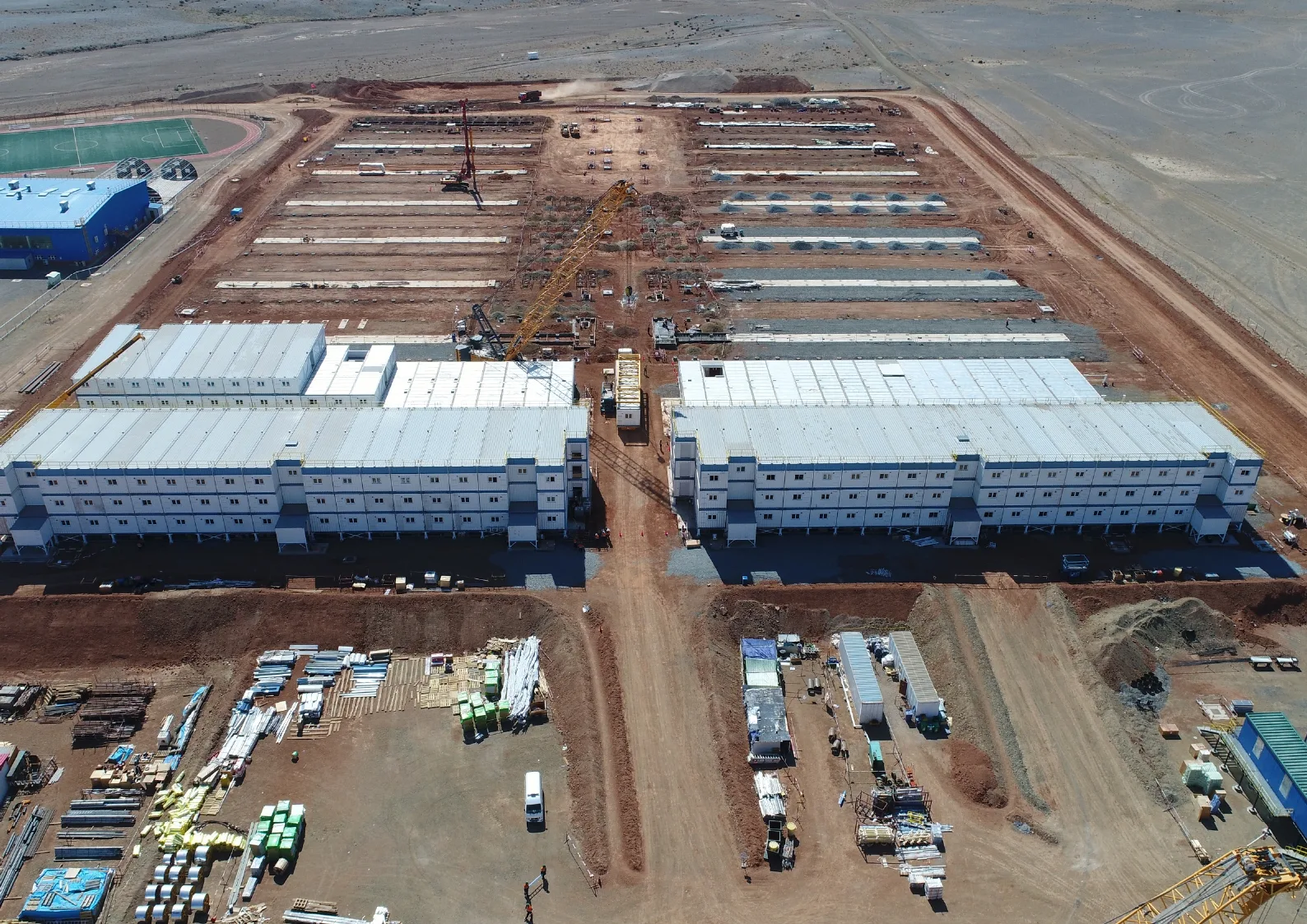
- Potential deployment at scale
Because the homes are manufactured off-site, production and site preparation can potentially be coordinated as parallel workstreams, helping reduce the amount of construction activity required after units arrive at the deployment location.
This approach can be particularly valuable in disaster recovery environments where local labor, materials, equipment and infrastructure may already be under pressure.
What this project demonstrates
Although the Venezuela initiative remains ongoing, the project illustrates how Nestron’s modular housing platform can be adapted beyond conventional residential applications.
The same deployment model can be considered for:
- Earthquake recovery
- Flood and hurricane displacement
- Temporary community relocation
- Transitional family housing
- Refugee and humanitarian accommodation
- Emergency worker accommodation
- Remote recovery operations
- Post-disaster community rebuilding
The objective is not simply to deliver structures quickly.
It is to create safe, functional and dignified places for people to live while communities recover.
Supporting faster, more dignified disaster recovery
Every disaster response is different. Geography, infrastructure, climate, transportation, family needs and the expected duration of displacement all influence the appropriate housing solution.
Nestron’s modular approach allows housing configurations, logistics and deployment strategies to be planned around these project-specific requirements while maintaining the advantages of controlled off-site manufacturing.
For organizations evaluating emergency housing, disaster relief accommodation, transitional shelters or rapidly deployable modular housing, Nestron can work with institutional partners to assess project requirements, deployment quantities, logistics and site conditions.
Planning an emergency or humanitarian housing deployment?
Talk with our institutional housing team about project requirements, rapid-deployment housing configurations and large-scale delivery.