Why are housing prices so high? Factory-built housing isn’t subject to the same forces
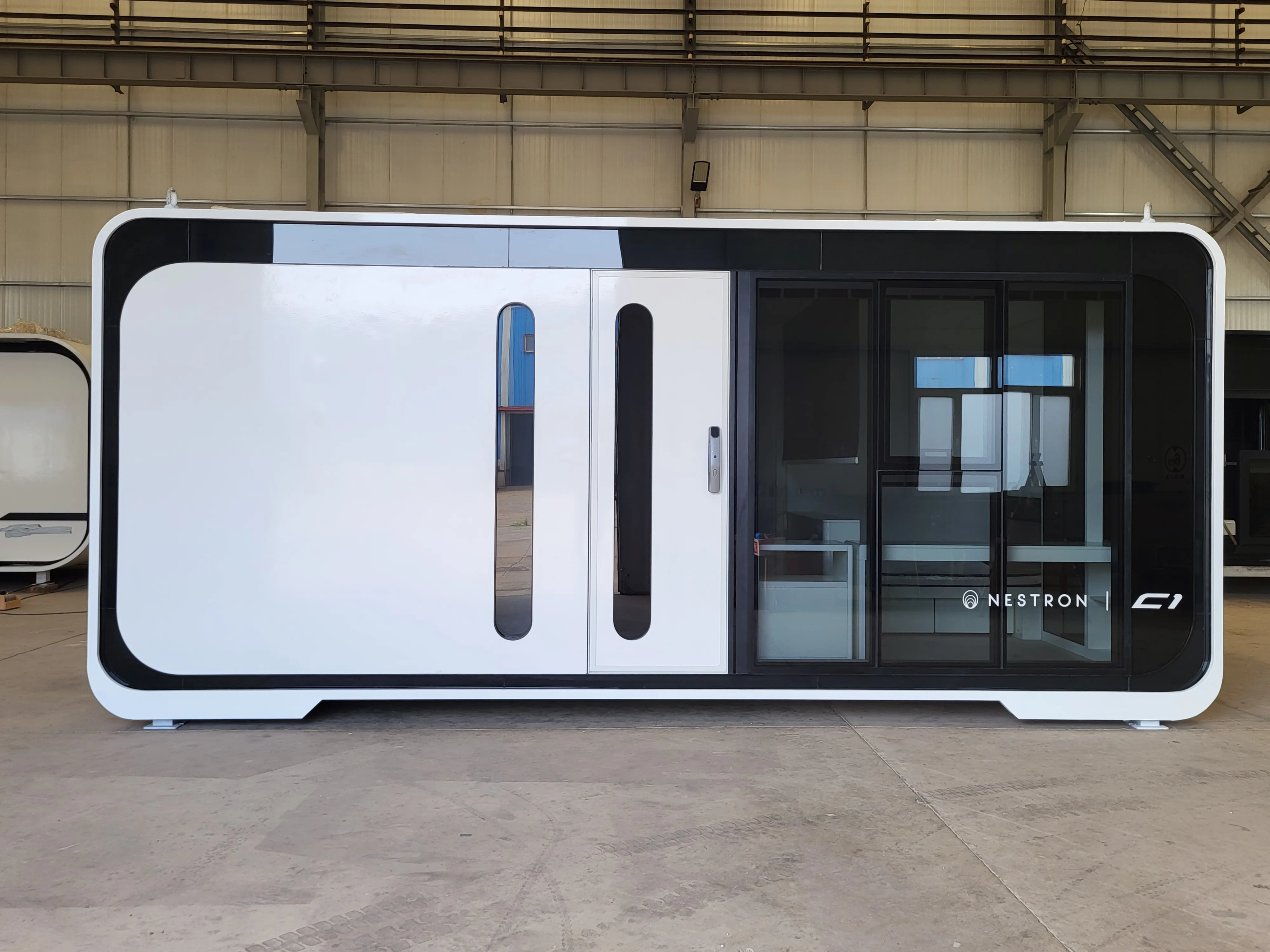
A Nestron Cube One costs $59,800 today (base price; shipping, foundation, and site work are additional and vary by location). It cost $49,800 last year. The site-built housing market added tens of thousands of dollars in construction costs over that same period, pushed by forces that factory-built housing is largely insulated from.
The median home in the United States now costs over $400,000. According to the National Association of Home Builders, a family needs to earn roughly $110,000 a year to afford one, which is 29% more than the median American household makes. Most of the conversation stops there, at the sticker shock. But not all of those costs work the same way, and some are avoidable if you understand where the money is going.
Labor and materials now absorb a record 64.4% of new home costs
It is tempting to blame land. But NAHB data from 2024 shows the cost of a finished lot fell as a share of a new home’s total price, dropping from 17.8% in 2022 to 13.7% in 2024. Physical construction costs, meaning labor and materials, absorbed 64.4% of the average new home’s $665,298 sale price. That is a record share.
New home cost structure, 2024
- Physical construction (labor + materials)64.4%
- Finished lot13.7%
- Drop in land share since 2022−4.1 pts
- Average new home sale price$665,298
Economist Chad Syverson at Chicago Booth studied 75 years of construction data and found that since roughly 2000, “hard” construction costs have lost their ability to predict what homes sell for. Cities with nearly identical building costs can have wildly different home prices. The difference comes from market friction: zoning rules, permitting bottlenecks, and a supply deficit that Realtor.com estimated at 4.03 million homes in 2025.
So site-built housing costs are layered. Physical construction expenses sit on top of regulatory and market forces that no individual buyer can control, and both layers are getting more expensive at the same time.
Why do construction costs keep rising?
The labor side is getting worse, and there is no obvious mechanism to reverse it. The Bureau of Labor Statistics reported that multifamily residential construction productivity fell 12.8% in 2024, even as the number of hours worked increased. The industry is doing more work to produce less output. Manufacturing labor productivity, by contrast, grew at an annualized rate of 3.3% over a comparable period.
Construction labor costs are also rising faster than material costs. In 2025, the cost of construction goods rose 2.5%, while construction services (labor) rose 5.6%. Robert Dietz, NAHB’s chief economist, has been direct about the implication: “The only way to really solve the housing affordability challenge is to build our way out of it.” The problem is that four workers are retiring from the trades for every one entering them.
Canadian lumber tariffs alone are projected to add $135 billion to residential construction costs over five years. A Center for American Progress analysis found that demand-side subsidies “primarily result in higher prices” in supply-constrained markets, because lower rates qualify more buyers to bid on the same limited inventory rather than expanding it. An estimated 5.5 million more households qualified to buy in 2025, competing for homes that largely did not exist yet.
Labor shortages, material tariffs, regulatory bottlenecks, and supply deficits all push in the same direction, and the site-built cost floor keeps rising.
How factory-built housing avoids these costs
Your television costs less than it did ten years ago, and the picture is better. Your phone is faster and cheaper per unit of capability than the one you replaced. Both are manufactured in factories, products of a system that gets more consistent and more efficient as production volume increases.
Housing has been left out of that dynamic because it occupies a different place in our expectations. A home feels like it should be built by hand, on your land, by local people. That instinct is understandable, but it’s also why housing costs keep climbing while the cost of nearly every other major purchase has stabilized or fallen.
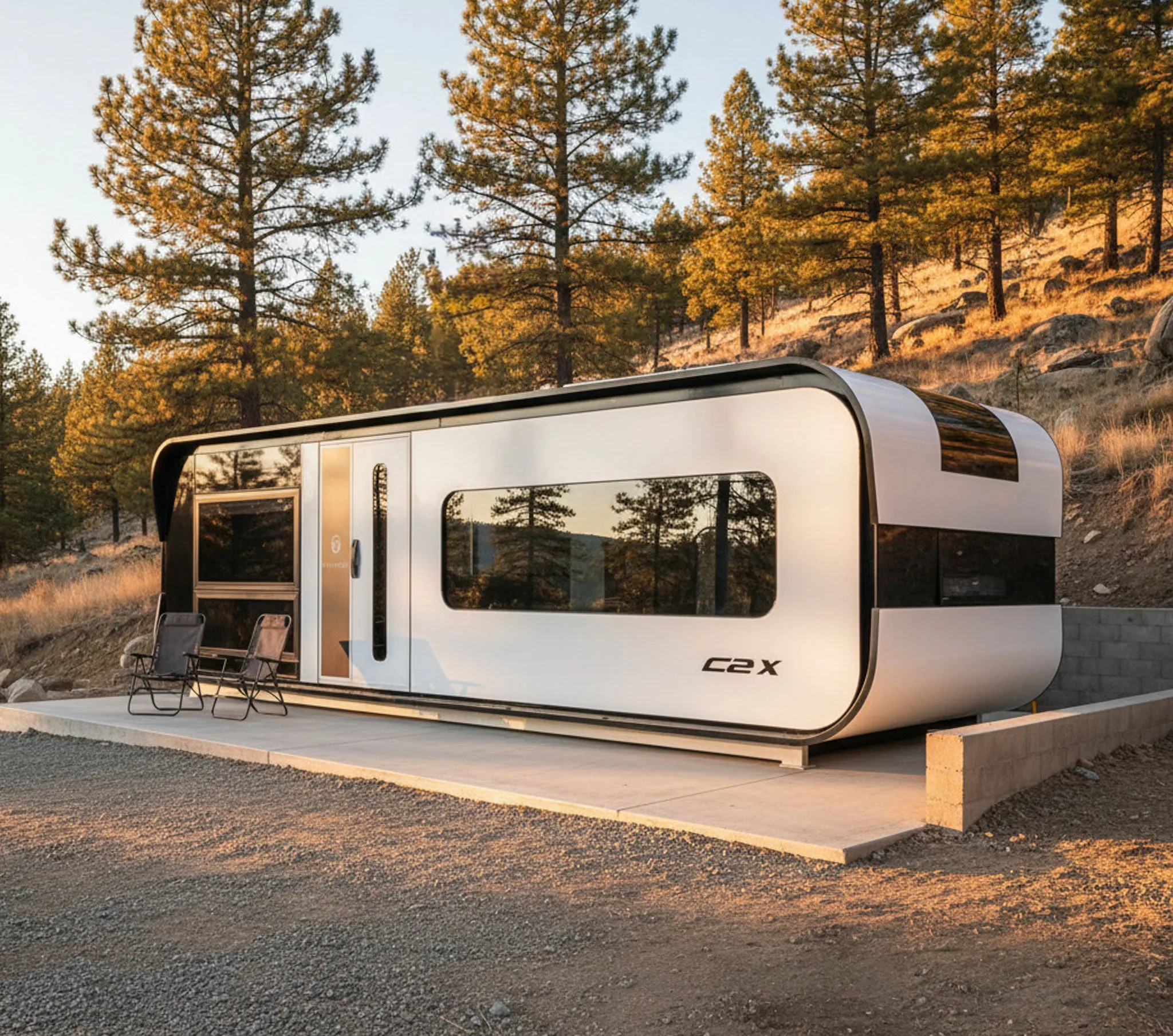
Factory-built housing has not followed the same steep price-drop curve as consumer electronics. But it has achieved price stability, something the site-built market cannot match. The inputs that determine a Nestron unit’s cost, a controlled manufacturing environment, a fixed supply chain, a standardized design built repeatedly by the same team, do not fluctuate with your local labor market or your county’s permitting backlog.
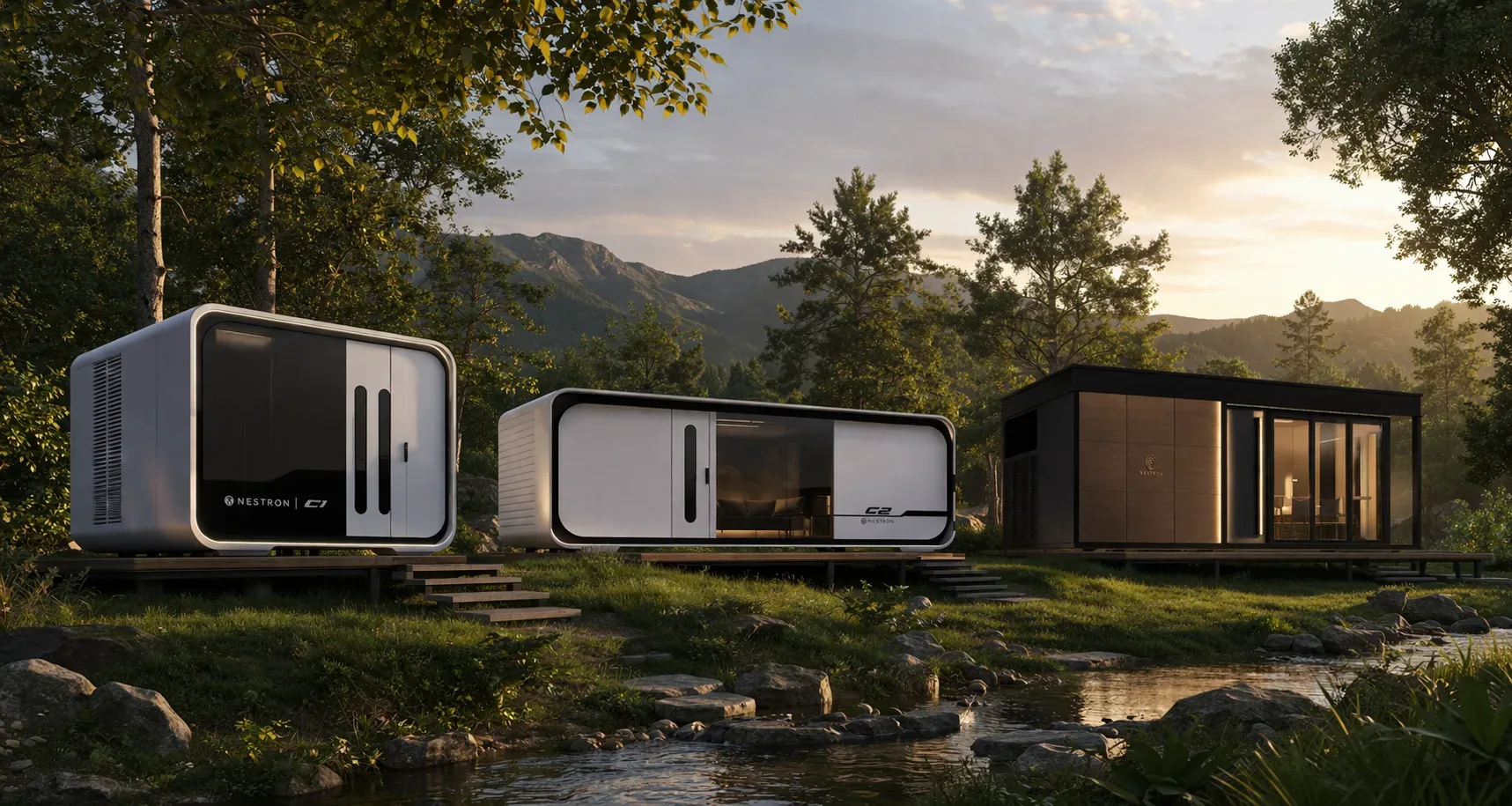
Nestron has kept the Cube Two at $69,800 and the Legend Two at $69,800 (base prices; shipping, foundation, and site work excluded) while site-built construction costs have climbed year over year. Manufacturing improves with repetition, while site-built construction starts from scratch on every project.
Who pays when costs change mid-project?
In site-built construction, the buyer absorbs almost all of the cost risk. A lumber price spike between contract signing and framing comes out of your pocket. The same goes for the carrying costs when your electrician gets pulled to a higher-paying job and your timeline slips three weeks.
Permitting delays, supply chain holdups, weather, everything lands on the buyer’s side of the ledger. The final invoice is almost always higher than the estimate.
Once a buyer places a deposit with Nestron, the price is fixed. If material costs spike during production, Nestron absorbs that, because the price was set against known inputs: a fixed bill of materials, a stable production team, a process that does not depend on weather or subcontractor availability. There is no midway phone call where the quote has changed.
The constraint this model requires is standardization. A site-built project can absorb mid-construction changes, a wall moved here, a finish upgraded there, at a cost. A Nestron unit cannot.
Customization gets decided before the factory order is placed, and once production begins, the design is fixed. That arrangement suits buyers who want to know exactly what they are getting and what it costs before a single panel is cut.
What changes if you already own land?
If you already own property, you are in a different position than someone trying to buy into a $400,000 market. The supply shortage, labor costs, and regulatory friction still affect the entire housing market. But land is the hardest piece to acquire, and you already have it. The question becomes what it costs to add a livable, permanent structure.
Site-built additions and ADUs expose you to every variable in your local construction market: labor availability, material price swings, weather delays, subcontractor scheduling, permitting timelines. A factory-built ADU from Nestron exposes you to shipping costs and site-specific installation work (base prices for all Nestron models exclude shipping, crane, foundation, site preparation, and utility work), but the unit itself is a fixed cost determined at order. A Nestron Legend Two costs $69,800 regardless of whether skilled labor in your county is abundant or scarce, or whether lumber tariffs have increased this quarter. Factory-built pricing has stayed flat while site-built pricing has not, because the buyer is exposed to fewer local variables.
Long-term value is comparable between the two, with data covering 2000 to 2024 showing site-built homes appreciated 212.6% and modular homes on owned land with permanent foundations appreciated 211.8%. Jessica Lautz, NAR’s deputy chief economist, described the broader market in direct terms: “We have haves and have-nots.”
Homeowners with existing equity are building wealth while first-time buyers are locked out. If you already own property, you are on the favorable side of that divide, and the question becomes what it costs to put a livable structure on it before site-built prices add another year of increases.
Nestron’s full product line, specs, and current pricing are at Nestron.
Frequently asked questions
A severe shortage of homes relative to the number of buyers is the primary driver. The U.S. housing supply deficit is estimated between 1.2 million (NAHB) and 4.03 million homes (Realtor.com). Combined with rising construction labor costs, material tariffs, and zoning restrictions that limit new building, this shortage gives sellers pricing power and locks out many first-time buyers.
Construction labor productivity has been declining (down 12.8% in 2024 for multifamily residential), while labor costs continue to climb faster than material costs (5.6% vs. 2.5% in 2025). Four construction workers are retiring for every one entering the trades. At the same time, demand-side interventions like lower mortgage rates add buyers without adding homes, which pushes prices up further.
Yes. Data from 2000 to 2024 shows site-built homes appreciated 212.6%, while modular homes on owned land with permanent foundations appreciated 211.8%, a difference so small it is not statistically meaningful. Modular homes permanently affixed to foundations are legally classified as real property and qualify for conventional, FHA, and VA financing.
For buyers who already own property and want to add a livable, permanent structure, factory-built ADUs offer a fixed-cost alternative to the variable pricing of site-built construction. A Nestron Cube One starts at $49,800 and a Cube Two at $69,800 (base prices exclude shipping, crane, foundation, site prep, and utility work). The structure’s cost is locked at order. Site-specific costs still vary by location.