Your next business location might be a tiny home
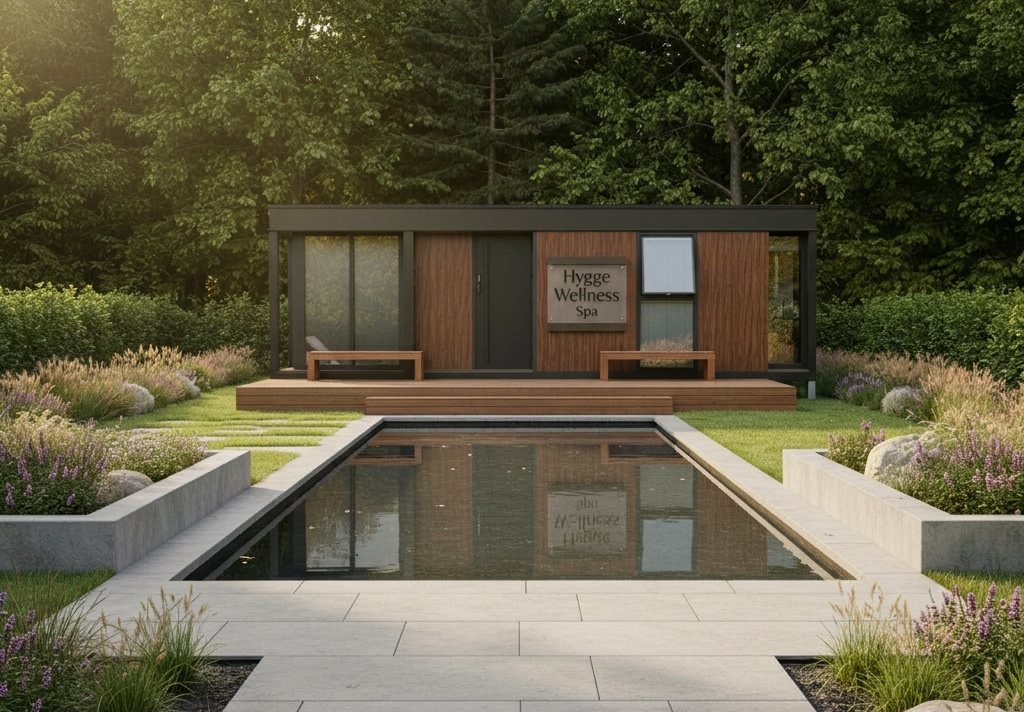
A massage therapist rents a room inside someone else’s wellness center. She pays $1,800 a month for a space she can’t brand, can’t redesign, and could lose when the lease is up. She’s looked into building her own studio, but even a small standalone structure costs $240 to $870 per square foot to build from scratch. For a 300-square-foot space, that’s somewhere between $72,000 and $260,000 before permits or site work. So she keeps renting.
Most small business owners who want their own space run into some version of this. The business model is there, the clients are there, but traditional construction prices out small buildings because the fixed costs of a ground-up build (contractor overhead, architectural plans, permit engineering, site supervision) don’t shrink proportionally when the building gets smaller.
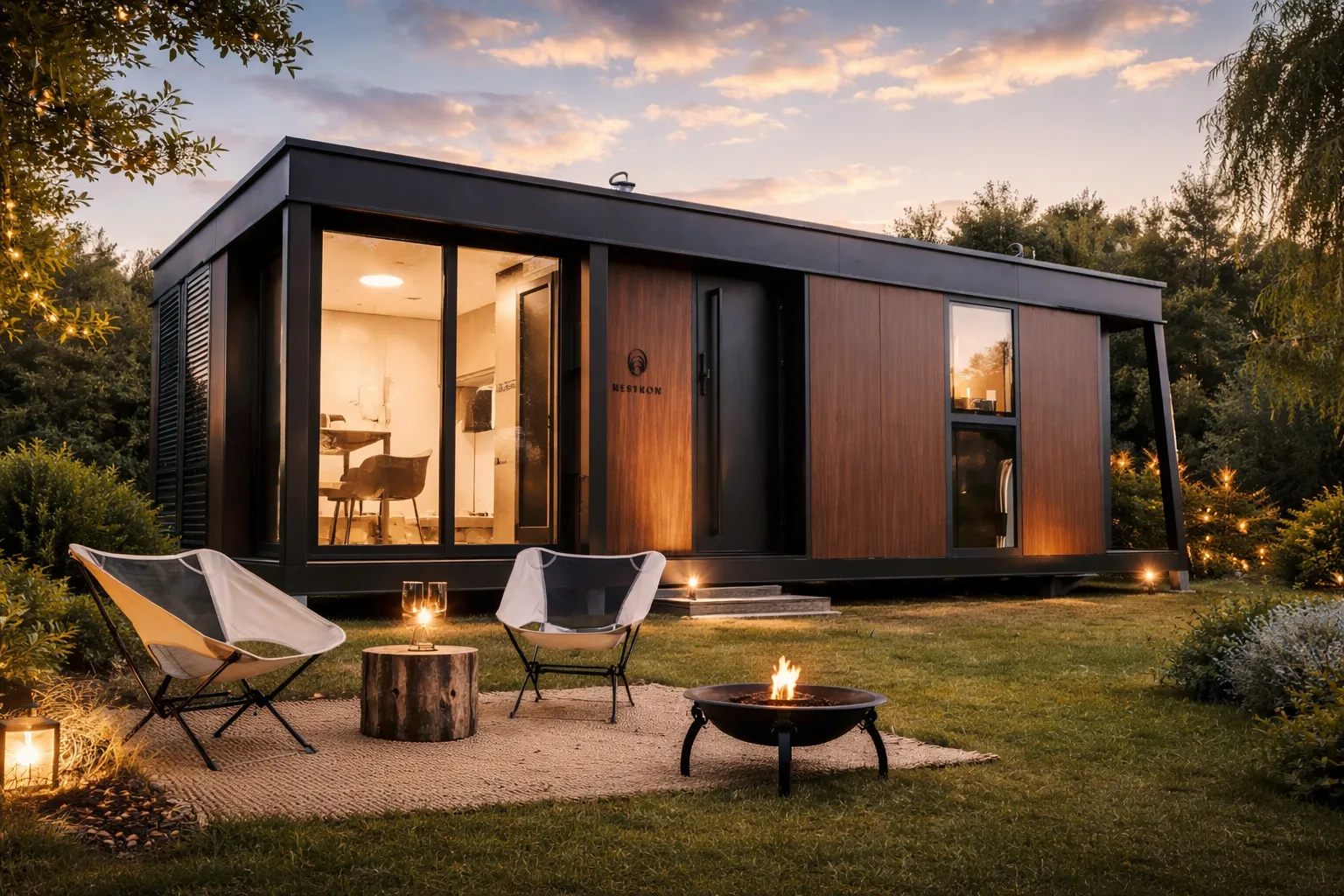
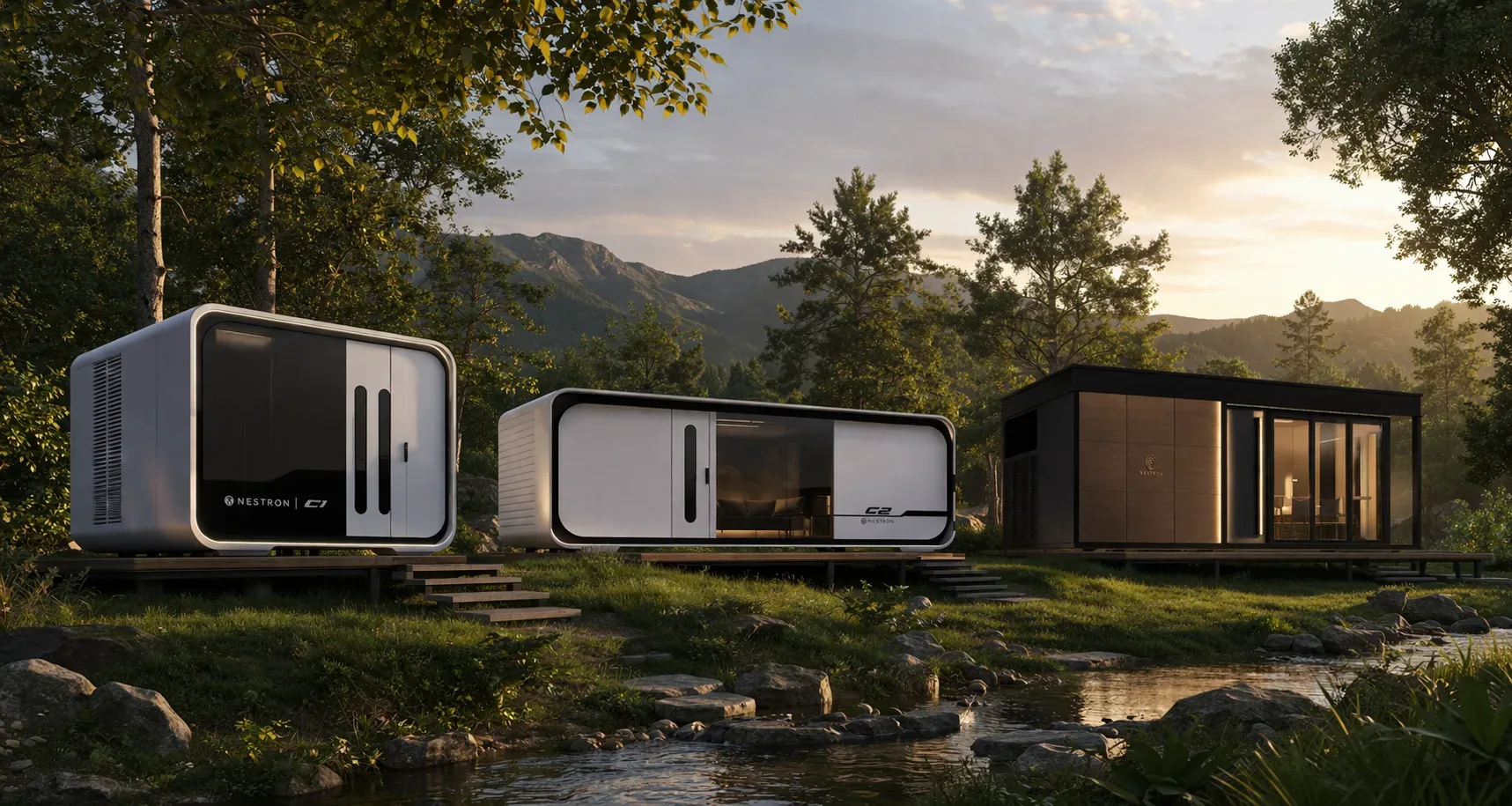
Nestron builds factory-finished structures that get delivered to a site and permanently installed on foundation piers. Most people associate this with housing, and that’s still the primary use case. But the same process that produces a home can produce a commercial space, because the factory doesn’t care whether the interior has a bedroom or a reception desk. The floorplan, layout, fixtures, and finishes are all configurable. A therapy practice gets a session room and a small waiting area; a coffee bar gets counter space and plumbing for espresso equipment; a satellite office gets desks and data wiring.
The cost structure is what shifts. Because production runs on a manufacturing line, the economics don’t collapse the way they do when you hire a general contractor to build a 300-square-foot structure from scratch. A McKinsey analysis of modular construction found that factory-built methods compress project timelines by 20% to 50% compared to site-built equivalents, with corresponding cost reductions. For someone who’s been renting because building seemed out of reach, that opens a door.
What kinds of businesses can fit in a few hundred square feet?
The range is probably wider than you’d guess. What connects them is that they all operate well in a few hundred square feet, they all benefit from having a dedicated physical space, and their owners have generally been priced out of building one.
Personal services and wellness
Massage therapy studios, private yoga or pilates spaces, acupuncture clinics, barbershops, beauty studios, tattoo parlors. Businesses where the client experience depends on privacy, atmosphere, and a space the owner controls.
Health and clinical
Rural outpatient clinics, telehealth stations with a physical exam room, counseling and behavioral health practices, dental hygiene offices, veterinary field clinics. Outpatient clinic construction alone runs $350 to $600 per square foot using conventional methods, which is part of the reason so many underserved communities still don’t have local clinical access.
Professional and creative
Architecture and design studios, photography studios, real estate satellite offices, tutoring centers, small law practices, accounting offices, co-working pods. The kind of professional service where you meet clients one or two at a time and don’t need more square footage than a generous living room.
Food and retail
Coffee bars, juice shops, farm stands with refrigeration, tasting rooms at vineyards or breweries, pop-up retail for brands testing a new market. Small-format food and retail where the compact, well-designed space is part of the concept.
Institutional and nonprofit
Credit union satellite branches, park and trailhead visitor stations, campus information kiosks, nonprofit service offices in underserved areas, disaster recovery field offices. Locations where the community need has always been clear but the construction cost was never justifiable.
Field and seasonal
Construction site offices, event venue service buildings, agricultural operations that need a climate-controlled workspace at the edge of a field, resort and glamping amenity buildings in locations where a conventional build would damage the landscape it’s supposed to complement.
Why ownership changes things
For a lot of these business owners, the real issue underneath the cost question is that renting has always been the only realistic way to have a physical location. Commercial leases come with annual increases, landlord restrictions on how you can use and brand the space, and the constant possibility that you’ll need to move when the term ends.
A factory-built unit on land you own or lease long-term is a different arrangement. You’re building equity in a physical asset configured specifically for your business, instead of paying monthly rent that builds equity for someone else. For a solo practitioner or small business owner, that distinction compounds over time.
And because these units can be relocated, the commitment isn’t permanent in the way a conventional building is. If the business outgrows the location or the owner’s plans change, the unit moves too. That’s a different risk profile than pouring a foundation you can never pick up.
What should buyers know before going commercial?
Nestron’s individual models range from 254 to 398 square feet, but units can also be stacked or connected for larger configurations. Nestron works with buyers to figure out what configuration fits the business, whether that’s a single unit for a solo practice or a multi-unit setup for something bigger. Commercial use requires local zoning and permitting approvals the same way any commercial structure does, and those vary by jurisdiction, so it’s worth having that conversation early.
There are more applications than any article can list
These examples are starting points. If your business operates in a room, and you’ve been told that building your own room costs more than it’s worth, that estimate was probably based on the only construction method the contractor knew. There’s a different way to get there, and for a growing number of business owners, it’s the first time owning a space has felt like a real option.
Nestron’s models, customization process, and pricing details are at Nestron.