
Frequently asked questions
Use cases and fit
Yes. Nestron homes work as accessory dwelling units on land you already own, and ADU use is the most common reason buyers choose Nestron. Every Cube and Legend model arrives factory-finished, wired, plumbed, and furnished, ready to connect to utilities on site.
People install them as backyard rentals, guest houses, home offices, in-law suites, or a second unit on a single-family lot. Model selection depends on your use case and footprint. The 254 sq ft Cube One and Legend One are compact single-occupant and couple-friendly options. The 375 sq ft Legend Two’s flexible one-to-two-bedroom layout is a common pick for households that need a little more room. Whether your jurisdiction allows an ADU on your specific lot depends on local zoning, which is reviewed for your address after the booking deposit.
Yes. A Nestron gives an aging parent, an adult child, or a live-in caregiver their own front door, kitchen, and bathroom within walking distance of the main house. Close enough to check in every morning. Private enough that everyone keeps their sanity.
The Legend Two at 375 sq ft with a flexible one-to-two-bedroom layout is a natural fit when space and privacy both matter. Single-floor layouts remove the stair problem that pushes many families into assisted living. That separation, with everything an independent adult needs inside one door, is what distinguishes an ADU from a spare bedroom. Buyers considering this route should know it’s a permanent structure, not a temporary fix, and the site prep and install are a real project.
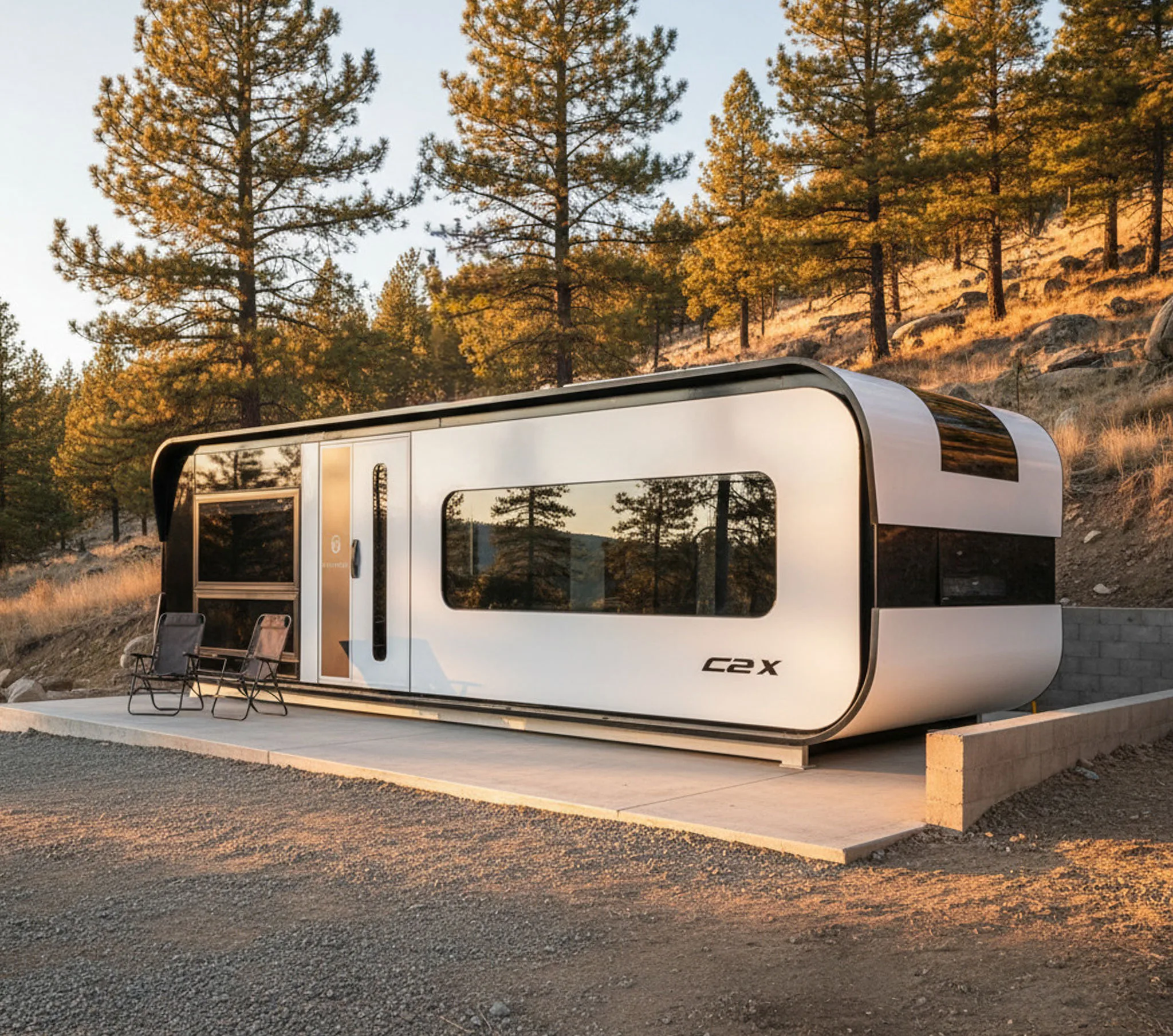
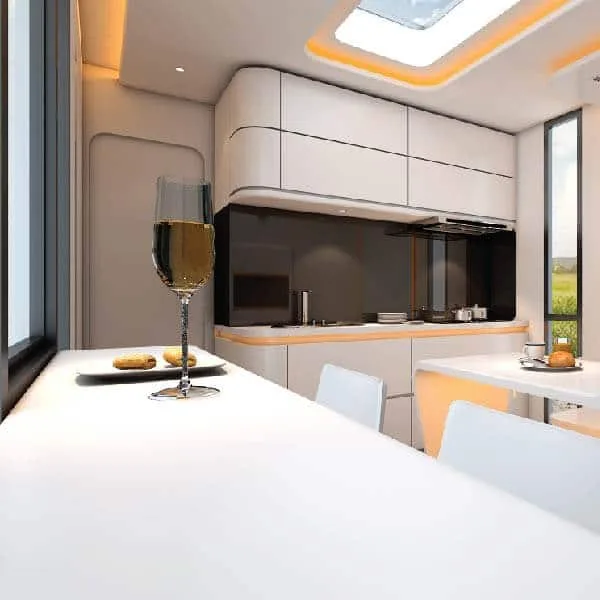
Yes, many buyers do. Short-term stays, mid-term furnished rentals, and long-term leases are all common use cases. The Cube One and Legend One at 254 sq ft are efficient picks for operators prioritizing per-unit economics. The larger Cube Two, Cube Two X, Legend Two, and Legend Two X fit operators targeting couples, small groups, or premium nightly rates.
Short-term rental rules vary significantly by city. Some jurisdictions restrict ADUs to long-term tenants only or require owner occupancy of the primary residence. Nestron’s permit review flags these restrictions for your address before production begins.
Generally, yes. Most Nestron installs use foundation piers, which handle moderate grade variation well without a continuous slab. A full slab, perimeter wall, or other foundation approach is also a valid choice if you prefer. Steep slopes or soft soil may require engineered footings or retaining work, handled by your local contractor.
Site conditions are assessed in two stages. Nestron begins with a detailed client intake form that captures what you can tell us about your property, soil, access, and grade. Independent local contractors then verify conditions on the ground and price out the site prep. Flat lots with firm soil are the simplest case. Sloped lots are workable, they just add scope and cost. If your site has a constraint that can’t be designed around, we surface that before factory work begins and refund the booking deposit.
Yes. A Nestron can run independently of grid power and municipal utilities. Off-grid setups typically combine the solar add-on, a composting toilet, and a local water source such as a well, spring, or cistern.
Nestron’s solar add-on comes in two sizes: a 4 kW plan and a larger 13 kW plan for the bigger units (the C2, C2X, and L2). The 13 kW plan is designed to cover daily power consumption including the floor heater in most climates. The system is sized around the appliances your unit ships with, so if you plan to add high-draw appliances later, talk through expected loads with your sales contact first so the plan is sized correctly. For a heavy-use property, or a particularly cold or low-sun region, buyers can also spec their own solar configuration through a local installer if they need more capacity than the Nestron add-on provides. Water and sewer handling depends on your site. An off-grid install is a straightforward project when your contractor has the right experience with solar and water systems.
Yes. Nestron units are built on a galvanized steel frame and perform well across a wide range of climates, including hot summers, hard winters, and storm-prone coasts, as they come from the factory. Cold-climate buyers typically add the floor heating add-on.
For jurisdictions with strict regulatory extremes, such as high-risk hurricane zones with demanding permit requirements, targeted customizations are available during the engineering phase of the order. These can include thickened glass, reinforced tie-downs, roof slope adjustments, and additional insulation. These changes are specified once, built in the factory, and arrive as part of the finished unit rather than as a site retrofit. Warranty and code specifics are confirmed at quote by destination.
Yes. A factory-built unit can be configured for commercial use. Massage studios, small clinics, coffee bars, satellite offices, visitor kiosks, and tasting rooms are all viable. The factory process is the same as a residential build. What changes is the interior layout.
Nestron works with commercial buyers during the order phase on layout, fixtures, and finishes. Built-in plumbing, counter space, consultation rooms, and similar reconfigurations fit within the existing model footprints, and larger commercial builds can use multi-unit or connected configurations. Commercial zoning and permitting is a separate track from residential ADU approval, and what’s allowed depends on your zoning district and the specific use, so it’s worth confirming your district’s commercial rules early in the conversation.
Yes. Nestron works with hospitality operators, rental investors, institutional buyers, and developers on multi-unit orders. Per-unit shipping cost typically drops on larger orders, and production scheduling is planned around your project timeline. Nestron units ship in proprietary protective packaging engineered for ocean freight, which is one of the reasons multi-unit deployments remain cost-predictable over long hauls.
For resort, glamping, workforce housing, and institutional projects, Nestron coordinates the factory build and international shipping, and assists with site planning, foundation design, and installation. We’ll work with you to sequence deliveries across multiple units and help coordinate with local contractors for site work. Pricing for larger orders is discussed during the quote phase. The economics of a 10-unit deployment are meaningfully different from a single ADU.
A Nestron arrives on a flatbed and is craned onto its foundation at your site. Most properties accommodate this comfortably: you need a flatbed route to the install location and room for a crane to set up nearby. Corner lots and open side-yard access are the simplest case, and most suburban and rural sites fall within that range.
Site access is reviewed in advance alongside the rest of the site conditions, so any constraints (tight urban lots, narrow driveways, low-hanging power lines, overhead obstructions) come up in planning rather than on delivery day. If your property has a real access challenge, we work it out before the unit leaves the factory. Crane and flatbed logistics are coordinated by the local partners on delivery day with your site conditions in hand.
The homes
Nestron offers six models across two design series. The Cube series (C1, C2, C2X) has a futuristic, curved-edge aesthetic. The Legend series (L1, L2, L2X) has a more traditional form. Every model arrives factory-finished, furnished, and ready to install.
| Model | Size | Bedrooms | Base price |
|---|---|---|---|
| Cube One (C1) | 254 sq ft | 1 BR | $64.800 |
| Cube Two (C2) | 328 sq ft | 1–2 BR | $84.800 |
| Cube Two X (C2X) | 398 sq ft | 1–2 BR | $104.800 |
| Legend One (L1) | 254 sq ft | 1 BR | $64.800 |
| Legend Two (L2) | 375 sq ft | 1–2 BR | $84.800 |
| Legend Two X (L2X) | 360 sq ft | 1–2 BR | $104.800 |
Base prices exclude shipping, site prep, crane, foundation, and utility connections.
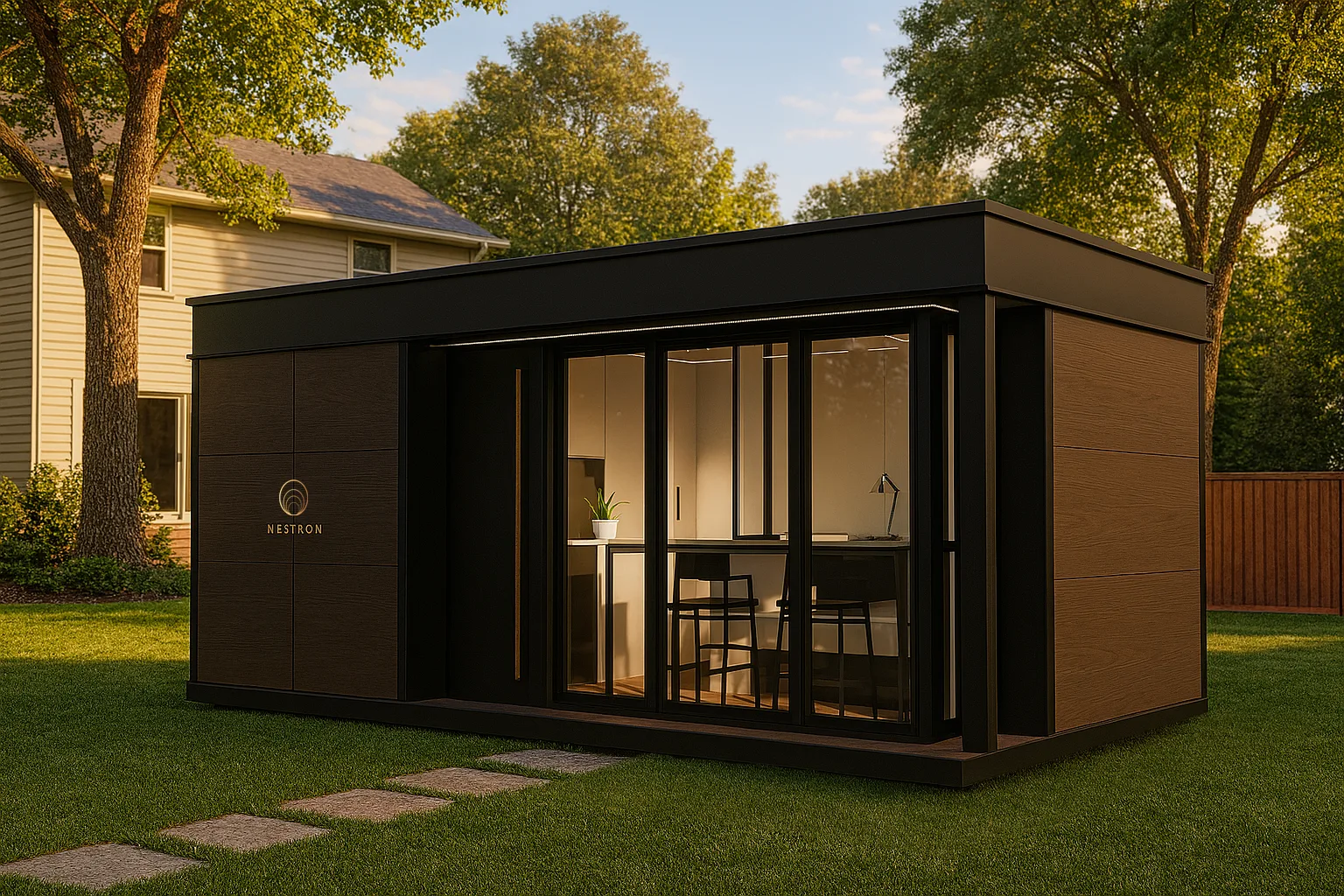
The biggest differences are on the outside. The Cube series has a futuristic, curved-edge exterior with a sleek modernist silhouette. The Legend series has a more traditional cabin-style exterior. Interior layouts differ between the two as well, but the exterior is where the series really diverge. Function, build quality, and warranty are the same across both.
| Cube series | Legend series | |
|---|---|---|
| Exterior | Futuristic, curved, modernist | Traditional, cabin-style |
| Models | C1, C2, C2X | L1, L2, L2X |
Cube buyers often want to stand out. An eye-catching short-term rental, an ADU that complements a forward-thinking modernist main home, a feature piece for a property where design is part of the appeal. The Cube fits naturally into locales where modernist or experimental architecture is already common, think SoCal desert, design-forward mountain towns, or coastal modernist neighborhoods. The Legend is the better fit for blending into an existing neighborhood, matching a traditional cabin aesthetic, working within HOA rules that favor conventional forms, or simply reflecting a personal preference for traditional design. Both series are built on the same galvanized steel frame and carry the same warranty, so the choice is really about which aesthetic fits your property and your taste.
Nestron models range from 254 to 398 sq ft. Smaller units (C1, L1) sleep one to two comfortably. Larger units (C2, C2X, L2, L2X) can sleep two to four, depending on layout and add-ons like the Murphy bed or bunk bed.
The Cube One and Legend One are designed as one-bedroom, one-bath units for a single occupant or a couple. The Cube Two, Cube Two X, Legend Two, and Legend Two X offer flexible 1 to 2 bedroom layouts. The Murphy bed ($5,040) and bunk bed ($2,424) add sleeping capacity in the larger units. All models are built as permanent dwellings with full kitchens and bathrooms, not as tiny-home shells.
Every Nestron home arrives finished and furnished. Standard inclusions: galvanized steel frame, insulation and envelope, kitchen with appliances, bathroom with fixtures, built-in cabinetry, flooring, lighting, digital entry lock, background music system, and electric blinds.
What isn’t standard: solar, floor heating, smart toilet, smart mirror, Murphy or bunk beds, and the patio and platform add-on. These are priced separately on the add-on table and ordered with the unit. The principle: what’s shown in the specs is what arrives on the truck.
Nestron homes are built on a one-piece galvanized steel and aluminum frame. This is the main structural system, chosen for its strength, longevity, and resilience against the conditions that wear down wood-framed construction. The structural body carries a multi-year warranty; specific terms are confirmed at quote by destination.
Steel resists rot, mold, and termites without chemical treatment. Galvanization adds corrosion resistance for humid and coastal climates, and steel is one of the most recyclable building materials available, which keeps its environmental value through the life of the home and afterward.
Yes to all three. Steel is naturally pest-resistant and doesn’t support rot, mold, or termites, so the termite treatment and annual inspection cycle that comes standard with wood-framed homes isn’t part of the ongoing cost. Fire resistance is higher than comparable wood-framed construction. Galvanization of the frame controls rust and extends the life of the steel in humid and coastal conditions.
For specific jurisdictions that require fire-rated assemblies (wildfire zones, for example) or for coastal installations that benefit from extra corrosion protection, targeted upgrades are specified during the engineering phase and built into the unit at the factory. These are handled per site rather than as generic catalog options, so your unit matches the conditions it’s going to actually live in.
Yes, within the boundaries of the factory model you’re choosing. Aesthetic changes like interior color, finishes, and minor cosmetic adjustments are generally handled at no charge within reason. Structural changes start with a $5,800 custom design fee that scales with scope if the request turns into a larger project. All customizations are finalized before the factory order is placed.
The factory process is built around repeatability, which is what makes Nestron’s pricing and production stability possible in the first place. That means the sweet spot is matching one of the existing models to your taste during the order phase, not designing from scratch. If you want a fully bespoke home with no starting template, a site-built architect and general contractor is a better fit. If you’re working within a Nestron model, we’ll get granular with you during the order phase on what’s changeable and what isn’t. Once the factory order is placed, the design is locked so production can run cleanly.
Price and what’s included
Base prices start at $64,800 for the Cube One and Legend One and run to $104,800 for the two premium models, the Cube Two X and the Legend Two X. These are the numbers Nestron controls and sets at the factory.
| Model | Size | Base price |
|---|---|---|
| Cube One (C1) | 254 sq ft | $64.800 |
| Cube Two (C2) | 328 sq ft | $84.800 |
| Cube Two X (C2X) | 398 sq ft | $104.800 |
| Legend One (L1) | 254 sq ft | $64.800 |
| Legend Two (L2) | 375 sq ft | $84.800 |
| Legend Two X (L2X) | 360 sq ft | $104.800 |
Base prices exclude international shipping, customs and import duties, port-to-site delivery, crane day, foundation piers, site preparation, and utility connections. Those are broken out in the next two answers so you can see exactly what the factory price does and doesn’t cover.
The base price covers the finished, furnished home as it leaves the factory: the one-piece galvanized steel and aluminum frame, insulation and full weather envelope, bathroom with fixtures, built-in furniture, lighting, flooring, digital lock, electric blinds, and background music system. The kitchen comes with a sink, induction cooktop, and range hood, plus the cabinetry and counters. Everything needed to cook, sleep, shower, and live in the home is either installed or ready for you to plug in.
What the base price does not include on the kitchen side: the fridge, the microwave, the coffee maker, the cookware, and the small appliances. Think of it like a fully finished apartment with a working kitchen. You bring your own pots, pans, and the plug-in appliances you want.
Also included in the base price: the post-deposit engineering work that tailors your unit to local building code, the licensed architect partner who prepares permit documentation, factory quality control, and a live video walkthrough with you before the unit leaves the factory floor. The booking deposit funds the engineering phase and is credited against the total. Solar, floor heat, smart toilet, smart mirror, extra beds, and the patio platform are priced separately on the add-on table below.
Base prices cover the factory-built home. What happens after it leaves the factory — ocean freight, customs, port-to-site delivery, and the work local contractors do on your land — is quoted separately, because those costs are set by your location and the freight market, not by Nestron.
The line items outside the factory price:
- International shipping, factory to destination port
- Customs and import duties
- Port-to-site flatbed delivery
- Crane day
- Foundation piers
- Site preparation and grading
- Utility connections (water, sewer, electric, gas)
- Local permit fees, separate from Nestron’s engineering work
Your formal quote includes best-available estimates for each of these, with final numbers confirmed at booking.
Here’s the current add-on menu. Everything listed is ordered through Nestron during the order phase and factory-installed where that’s possible.
- Floor heating
- Solar 4 kW
- Solar 10 kW
- Solar 13 kW
- Smart toilet
- Smart mirror
- Patio and platform
- Bunk bed
- Murphy bed
Factory-integrated solar costs meaningfully less than a post-delivery retrofit, which is why we recommend ordering solar with the unit rather than after. Most of the other add-ons are either cheaper or only possible to fit during factory build. Talk through your use case with your sales contact during the quote and lock in the add-ons then.
A Nestron is typically a fraction of what comparable site-built ADU construction runs per square foot in the US. Site-built ADUs often cost several times Nestron’s per-square-foot price once you account for architect fees, contractor overhead, construction loan carry, and the general cost of framing a custom structure on-site over months of labor. A Nestron collapses almost all of that into a single factory price.
This is a base-to-base comparison. Both paths still carry the site-specific costs: foundation, utility connections, permit fees. Site-built gives you design flexibility and local labor. Factory-built gives you price certainty once the order is in, a shorter timeline on-site, and a finished product that arrives furnished and ready for move-in. For most individual landowners adding an ADU, guest house, or rental unit, a Nestron usually wins on both price and timeline.
No, not on the factory side. Once your order is placed and the deposit is in, Nestron’s base price on the unit is locked. If steel prices spike or a component supplier raises rates during production, that’s Nestron’s problem, not yours. The price you agree to at booking is the price you pay on the unit itself.
What can move are the costs Nestron doesn’t control: ocean freight, customs and duties, port-to-site delivery, crane, and site work. Those markets shift between booking and delivery, and Nestron’s quote separates them from the factory price so you can see which numbers are locked and which are still tracking the market. Shipping in particular is quoted through a third-party broker and final rates are set close to loading. Your quote flags which line items are fixed and which are estimates subject to confirmation at booking.
Paying for it
Standard terms are 100% of the unit price before the factory releases your unit for shipping. A $10,000 deposit secures your order, funds the post-deposit engineering and architect review, and is credited against the total. Alternative payment schedules can be discussed during the quote phase, and any custom terms are written into your individual contract.
The deposit is $10,000 per unit, and it does three things. It secures your place in the production queue. It funds the engineering and licensed architect review that matches your chosen model to local code and site conditions. And it kicks off customization. Basic customization is included at no extra cost. A structural custom design, meaning anything that changes the footprint, layout, or load path of the unit, is a separate $5,800 design fee quoted upfront before that work begins.
The engineering review is run by a structural engineer and a local licensed architect, sourced per project. This is project-specific work that can’t happen speculatively before Nestron knows where a unit is going, which is why it’s funded at the booking stage rather than rolled into the base price of every quote. The booking fee is credited against your total unit price at the end.
Yes, in two standard cases. If the post-deposit engineering review concludes there is no legal path for a Nestron on your land, the fee is refunded. If financing falls through after your order is placed, the fee is also refundable. Individual contracts occasionally include custom conditions beyond these two, and standard force majeure provisions apply.
The engineering review is specifically designed to surface jurisdictional blockers early, before the factory begins any work. And because every Nestron is built to order, the factory can usually design around a tough site by modifying the unit during production rather than rejecting the project. A refund scenario means the regulatory or structural situation leaves no viable path at all, not that we hit one hurdle and walked away.
For US buyers, yes: Nestron can assist with the financing process. We have a US financing partner and we make that introduction at no cost. Buyers are equally welcome to use their own lender if they already have one they trust. Outside the US, financing is still possible but the process runs entirely on the buyer’s side, because Nestron doesn’t have lending partners in those markets.
Financing is a separate conversation from your Nestron order and runs on its own timeline. If financing falls through after booking, your deposit is refundable.
Direct bank transfer to Nestron’s Singapore corporate account is the default. The full bank details are provided on your pro-forma invoice rather than published publicly. Nestron is also building out easy electronic payment rails for buyers who’d rather pay by card; the processor and exact fee will be confirmed on your invoice at booking so you know the number before you choose.
International wires typically take two to three business days and involve currency conversion if your account isn’t USD-denominated. Card payment is faster but adds a processor fee, so most buyers go with the wire. Either way, you receive the pro-forma invoice before any money moves, and that invoice is the contractual document for the transaction. Keep a copy for your records, the way you would for any major international purchase.
Yes. Every order runs on a pro-forma invoice that lists payment terms, delivery conditions, specifications, and price. The invoice is the contractual document and sits under Singapore international trade law.
A few things stack on top of the paperwork. The factory doesn’t release a unit for shipping until you’ve reviewed and approved the completed build on a video inspection call with your sales contact. If the inspection surfaces a problem, the unit stays in the factory, gets corrected, and is re-inspected before it goes anywhere. Cargo insurance is a required purchase at the point of shipping, arranged through the freight forwarder; if something happens in transit, claims run through the forwarder or vessel provider, and Nestron supplies documentation support to move the claim forward. Because Nestron ships in proprietary ocean-freight packaging built specifically for these units, transit damage is rare to begin with. Your payment sits behind the contract, the inspection gate, and the shipping protection, and those three things are meant to work together.
Permitting
Yes. A Nestron home can be considered as permanent dwelling installed on foundation piers and connected to utilities, so your local building department treats it like any other new structure on your land. A building permit is required in every US jurisdiction we work in.
Nestron drives the technical permit work support with a licensed contractor from your local jurisdiction. After the booking deposit, a structural engineer and a local licensed architect prepare the sealed drawings, engineering calculations, and code responses your application requires, and they work directly with your local building department through the review.
Most jurisdictions land between 4 and 12 weeks from the start of the engineering review to a permit in hand. Faster ones move in a month. Slower ones, in areas with long review queues or dense residential code, take the full quarter. Your engineer and architect partners know the local rhythm and will give you a more specific estimate once they see your address.
The engineering review starts immediately after the booking deposit, so permit work begins before the factory does. In most cases your permit is in hand before the unit ships.
The post-deposit engineering review is where this happens. A structural engineer and a local licensed architect assess your site, verify the code requirements in your jurisdiction, and specify any changes the model needs to meet those requirements. The factory then builds the unit to those specifications.
Engineers and architects are sourced per project. In regions where Nestron has completed prior work, trusted partners are reused. This is one reason the booking deposit is required before engineering work begins: the review can’t be done speculatively for every prospect.
Very little. A few quick checks save time, though. Does your general zoning district allow dwellings or accessory dwellings on your lot? Do you have an HOA, and does it allow additional structures? Which local planning department would you be working with? These are warm-ups, not prerequisites.
The full jurisdictional review is Nestron’s job and happens after the booking deposit. But if you’re already aware of a hard blocker, like an HOA that forbids detached structures or a lot inside a strict historic overlay, we’d rather hear about it at the first conversation so you don’t put down a deposit on something that can’t be placed. Most buyers don’t face hard blockers.
The first move is always to engineer around it. Most jurisdictional concerns can be resolved by adjusting the unit itself: a different foundation approach, a revised load path, tweaks to envelope or egress, a modified footprint. The engineering review’s job is to find a viable code path, and in most cases one exists. Nestron builds to order, which means a lot of what looks like a blocker on the first pass becomes a customization on the second.
Outright rejection is rare. Hard blockers usually trace to a short list of causes: lot size below minimums, strict historic district rules, HOA restrictions on detached structures, or wetland and protected-land overlays. The review checks for these first.
Yes. Nestron ships and installs across the US, and we evaluate every project individually. Where practical constraints come up, like unusual local code, remote port access, or difficult last-mile logistics, your sales contact will flag them at the quote stage so nothing is a surprise after the deposit.
Getting it to your site
Every Nestron is built inside our own SOA factory using proprietary manufacturing technology and a vertically integrated supply chain. Factory-direct production is how we deliver the build quality, features, and finish level that would cost well over $200,000 from a domestically assembled competitor at a fraction of that price. Even US-based manufacturers source the vast majority of their materials and components from the same global supply chains: our advantage is that we control the full process from raw material to finished home, under one roof, with consistent quality at every step.
Once your unit passes final factory inspection, it ships to a US destination port by ocean freight and then travels by flatbed truck to your site. Nestron coordinates the entire logistics chain and keeps you updated throughout. Production runs 90 to 120 days. Ocean transit adds an estimated 15 to 30 days to US destinations, subject to market conditions.
Nestron works with multiple established international shipping broker experienced in moving oversize modular structures across borders. The broker manages ocean freight logistics, customs paperwork, and import duty documentation. Nestron coordinates the process end to end.
Shipping costs depend on your destination port, how many units you’re ordering, freight market conditions, and port-to-site distance. Because every one of those variables moves, we quote shipping at the time your order is confirmed rather than publishing a fixed number.
Your sales contact will walk you through what’s known at the quote stage and what’s subject to final confirmation at booking. Customs and import duties are quoted separately. We keep every variable cost visible and itemized so you can see exactly what you’re paying for, rather than folding it into a single bundled price.
After the unit clears customs, it travels by flatbed truck to your site. Nestron coordinates this leg by default, including route planning for access considerations like low bridges, weight-restricted roads, and tight turns. If you prefer to arrange your own trucking, that works too.
Port-to-site delivery cost depends on distance and local trucking rates. Sites within a couple hundred miles of a major port are usually straightforward. More remote or access-constrained sites take additional planning and may cost more. Your sales contact flags any access concerns during the engineering review, and delivery day is scheduled alongside crane day so both happen in sequence.
Yes. Nestron units arrive as finished structures on a flatbed and are craned onto foundation piers at your site. Nestron helps recommend and coordinate a local crane service, though you’re welcome to arrange your own if you have a preference.
Crane cost depends on unit weight (Nestron units range from 4 to 7 tons), reach distance, overhead obstructions, and local rates. Most installations are single-day jobs. Your foundation, site access, and overhead clearance need to be ready before crane day. If conditions on site prevent the operator from completing the lift, the day is rescheduled at your cost. The engineering review flags crane-access concerns early, and we coordinate timing to keep everything on track.
A local contractor handles site preparation, foundation piers, and any grading or clearing your site needs. Nestron provides engineering specifications and pier layout, and the contractor builds to those specs. If you need help finding a qualified contractor in your area, let your sales contact know and we’ll do what we can to connect you.
Standard sites on flat, firm ground with straightforward access are the simplest case: a few concrete piers and minimal grading. Sloped, wet, or remote sites may require more extensive work and higher costs. Nestron assists with documentation, engineering specs, and coordination throughout the site prep phase — your contractor handles the physical work on the ground.
Your local contractor handles water, sewer, electric, and gas connections. Nestron delivers the unit with connection points, piping, and the electrical panel pre-installed from the factory. Your contractor runs the trenches, makes the connections, and arranges utility company inspections.
Utility cost may scale with distance. A unit sited close to existing connections is a straightforward trenching job. A unit farther from the nearest tap, across a road, or on a property with well and septic will involve more work. Off-grid setups avoid utility trenching but require their own systems (solar, composting toilet, water catchment or well) and a contractor comfortable with off-grid installations. These choices are finalized during the order and engineering phases.
Yes. Cargo insurance is mandatory on every Nestron shipment, and the cost is included in the shipping line item.
Claims go through the broker and the insurer, and Nestron assists with documentation.
Living in a Nestron
Nestron units are engineered for your specific location. During the design review, insulation thickness, heating and cooling specs, and structural reinforcement for wind or seismic loads are all tailored to meet your jurisdiction’s permitting requirements. Your unit is built to your conditions, not a generic average.
The building envelope is tight by design. Factory-assembled seams eliminate the air leakage problems that come with field-built construction. For cold climates, the built-in floor heater delivers consistent, distributed warmth across the entire living space. For hot climates, the small footprint and sealed envelope mean cooling loads are a fraction of what a conventional home demands.
Nestron homes come with a multi-year warranty. Coverage spans structural components (the steel frame, envelope, and foundation connections), major systems (HVAC, induction cooker, windows, electrical), and interior fixtures. Because warranty terms vary by state, your specific coverage is documented during the purchase process.
If something comes up, reach out to us. Manufacturing issues are handled directly by Nestron. Transit damage is covered by the shipping insurance included with your delivery.
Nestron units are compatible with Alexa, Apple Home, and Google Home. The digital lock, electric blinds, and integrated speaker system all connect to whichever platform you already use. Smart appliance add-ons like the smart toilet and smart mirror integrate at setup the same way.
If you’re already on Apple Home, the unit works with Apple Home. Same for Alexa and Google. Your contractor handles the electrical connections at install, and smart home pairing is a standard configuration step using your own accounts and network.
Nestron bathrooms come fully equipped with standard or upgraded fixtures (smart toilet is an add-on) and are pre-plumbed at the factory. Your local contractor makes the final connections at install: either to municipal sewer or to a septic system, depending on your site.
For sites with an existing septic tank, the bathroom connects like any additional fixture. For sites on municipal sewer, the connection is a standard trenching job. Your contractor handles the permit and inspection for the sewer connection, which is separate from the dwelling permit.
Yes. Nestron offers two solar tiers per model: C1 and L1 units have 4 kW and 10 kW options, while C2, L2, C2X, and L2X units have 4 kW and 13 kW options. The higher-tier plans are designed to cover daily power consumption, including floor heat, in most climates.
For buyers who want full energy independence, additional third-party systems (extra panels, expanded battery banks, backup generators) can be integrated on top of the factory-installed solar package at your discretion. Most of the time, Nestron’s own solar configuration gets you all the way there. For the remaining edge cases, the third-party integration path closes the gap. Talk through your expected loads with your sales contact before ordering so the solar plan is sized correctly.
Day-to-day upkeep is comparable to any small modern home, and in some respects less. The steel frame doesn’t rot, warp, or need repainting. There’s no termite treatment, no siding replacement, and no wood-rot cycle to manage. Standard care for the kitchen, bathroom, electrical, and HVAC applies. An annual visual check of the roof, exterior seals, and foundation piers is good practice.
Nestron also provides lifetime after-sales support. If something needs troubleshooting or you need to source a replacement part as normal wear happens over the years, contact us directly. We stay with the unit long after delivery.
Nestron units weigh 4 to 7 tons depending on the model and customization. They sit on foundation piers rather than a continuous slab, which means relocation is straightforward: a crane lifts the unit, a flatbed moves it, and another crane sets it down on new piers at the destination.
This is one of the advantages of factory-built construction. If you move, the home moves with you. If your plans change, you can sell the unit to a different buyer who installs it on their own site. Traditional construction doesn’t give you that option. If you’re considering a future move, check with us on any warranty details specific to relocation.
The buying process
One of the biggest advantages of factory-built construction is that much of the work happens in parallel. While the factory is building your unit, engineering review, permitting, financing, and site prep all move forward at the same time. That parallel work is what compresses total project time compared to site-built construction, where most steps happen one after another.
Your sales contact walks you through this sequence at the quote phase, including the handoff points between Nestron, the shipping broker, and your local contractor.
Factory production runs 90 to 120 days from when payment clears and the engineering review is complete. Shipping adds an estimated 30 to 40 days to US destinations. Permitting and site prep happen in parallel with production, so they don’t usually add to the total unless permitting takes longer than expected in your jurisdiction or site conditions require extra work.
Factory production is the predictable piece. Shipping has a range because freight markets move. Permitting timelines vary by jurisdiction and are outside Nestron’s hands. Site prep depends on your contractor and site conditions. For a straightforward ADU project on a ready site in an active-ADU jurisdiction, a rough range of six to eight months from deposit to move-in is realistic. More complex sites or slower permitting processes may extend that. Nestron provides best-available estimates, not timeline guarantees.
Yes. Nestron has Legend Two units installed at Morongo Casino Resort and Spa in Cabazon, California. Visits are arranged by appointment, either in person or via live video walkthrough. Contact us directly and we can almost always schedule a time that works.
The Morongo Legend Twos are the currently available US visit units and also the most popular model for ADU and multigenerational use, so what you see there is representative of what most buyers end up ordering. Some on-site units may also be available for direct purchase, which skips the production and shipping wait. Your sales contact can walk you through current availability and pricing. If you’d like to see a different model, video tours and photos of completed projects are available as well.
Nestron provides live video walkthroughs during production. You get a minimum of two scheduled video sessions with your project coordinator and factory staff. One happens mid-production when the structure is still open and changes are possible. The second happens at completion, before shipping. Additional video tours or photos are available at any stage on request.
The mid-production walkthrough happens when the frame, electrical, and plumbing are visible. This is the stage where problems are cheapest to fix. The completion walkthrough is your final approval checkpoint before the unit leaves the factory. If something isn’t right, it’s corrected in the factory and re-inspected. Photos between the scheduled sessions are standard. The factory shows the work, and the buyer verifies it.
Final inspection happens on a live video call in the last days of production. You review the completed unit with the project coordinator and factory staff, and flag anything that needs correction. The unit does not ship until you approve the inspection. Third-party inspectors can be arranged if you want them.
The inspection covers finishes, appliances, fixtures, electrical, plumbing, and any structural details you want to see. Problems found during inspection are corrected in the factory and re-inspected before shipping. Because this happens before international transit, resolving issues at this stage is much faster and cheaper than resolving them after delivery. If you’d like to bring in a third-party inspector, let your sales contact know in advance so factory access can be arranged.
Every Nestron shipment includes mandatory cargo insurance, and the unit itself is built to handle long-haul transit. The one-piece galvanized steel and aluminum frame is inherently durable, and the factory secures each unit using proprietary packaging engineered specifically for ocean and overland shipping. Factory video inspection catches problems before the unit leaves, and the packaging does the rest. Transit damage is uncommon.
If damage does occur, the cargo insurance covers repair or replacement. Photograph the damage before anything is moved off the truck, notify Nestron and the shipping broker immediately, and do not install a damaged unit. Nestron assists with claim documentation and the process is standard. Once installed, Nestron’s manufacturing warranty covers quality issues traceable to the build. Installation issues go through your contractor.
Contact Nestron through the website. A sales contact will walk you through model selection, use case, location, and site specifics, and send a written quote with the base price, relevant add-ons, best-available estimates on shipping and site costs, and next steps if you want to move to booking.
The quote is a no-obligation document. It doesn’t commit you to a purchase. It’s the point where everything becomes concrete for your specific project. From there, the booking deposit is the next step, and the engineering review, permitting, and financing all begin moving as soon as the deposit clears. Most buyers go from first contact to written quote within a few days, and from quote to booking on their own timeline.
If permitting falls through or financing doesn’t come together, Nestron refunds the deposit. Cancellations for other reasons are handled differently, and the deposit is generally not refundable if you simply change your mind after booking. The deposit locks in your production slot and starts the engineering review, so Nestron commits resources on your behalf from that point forward. That’s why the refund policy distinguishes between circumstances outside your control (permitting denial, financing inability) and a change of plans. If you’re unsure about permitting or financing feasibility, talk through those specifics with your sales contact before placing the deposit.
Yes. Because Nestron homes are permitted and installed as permanent structures, buyers have access to the same financing options available for traditional home improvements: HELOC, renovation loans, construction-to-permanent loans, and similar products. Nestron can connect you with a lending partner, or you’re welcome to use your own bank or lender.
Depending on credit profile and loan type, many buyers achieve rates comparable to a traditional home mortgage. That’s not a guarantee, as rates depend on your lender, credit, and loan structure, but the permanently-installed classification opens doors that other prefab and modular products sometimes can’t. Your sales contact can introduce you to the lending partner Nestron works with, or provide whatever project documentation your own lender needs for underwriting. There’s no obligation to use one path over the other.



Couldn’t find an answer?
For additional information, feel free to reach out to our advisors.
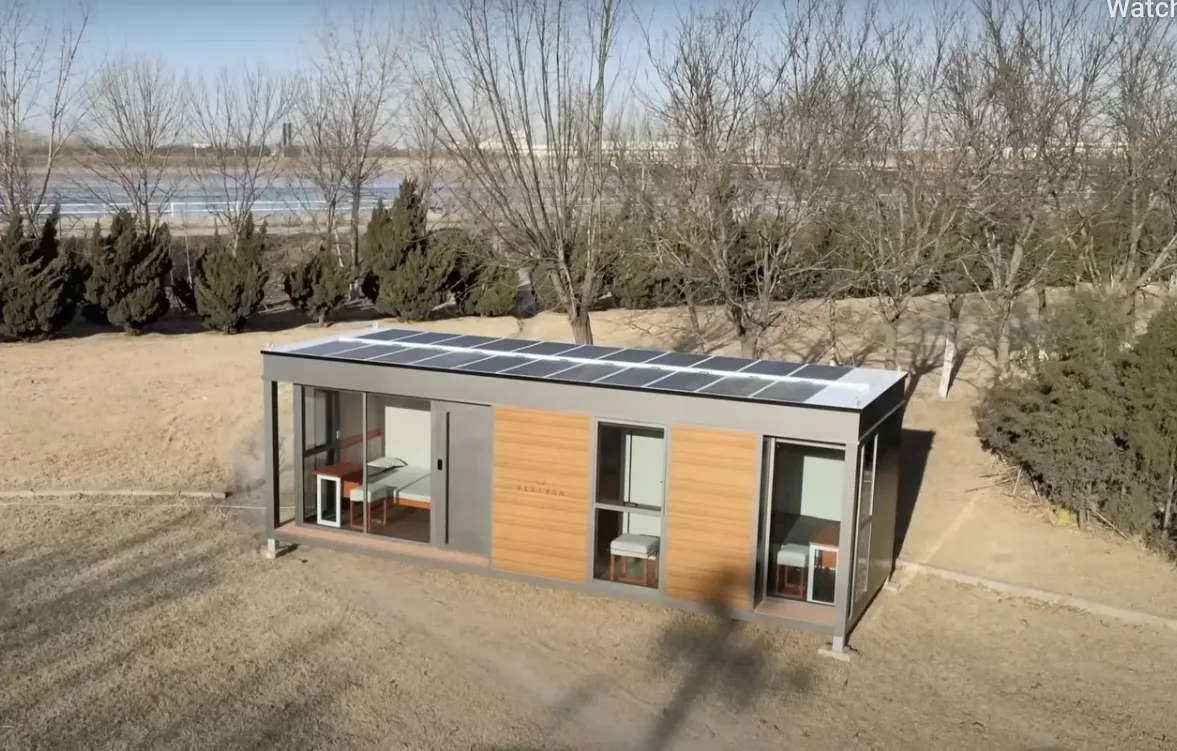
Access curated video tutorials and expert walkthroughs