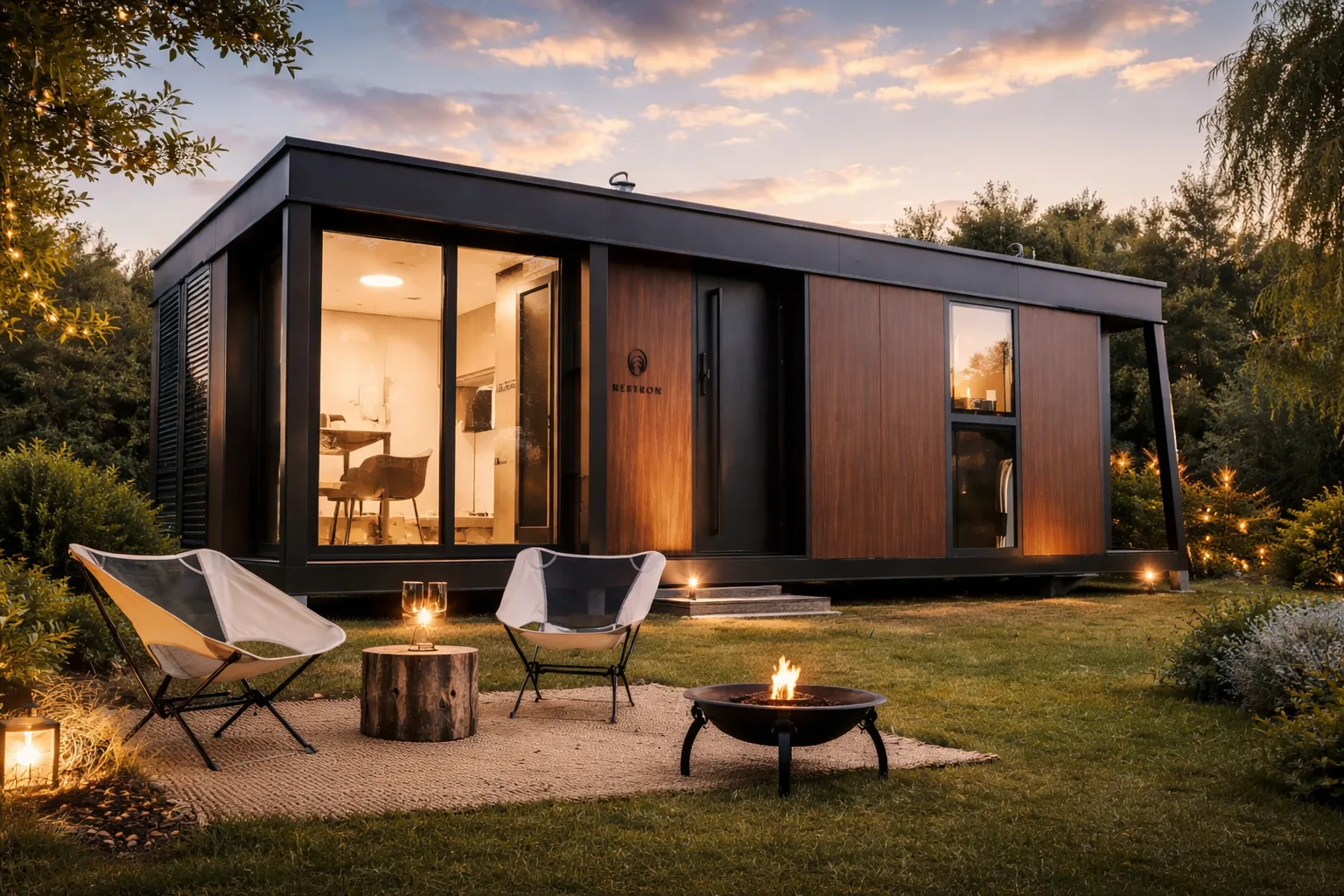
How families are using ADUs to relocate aging parents without uprooting anyone
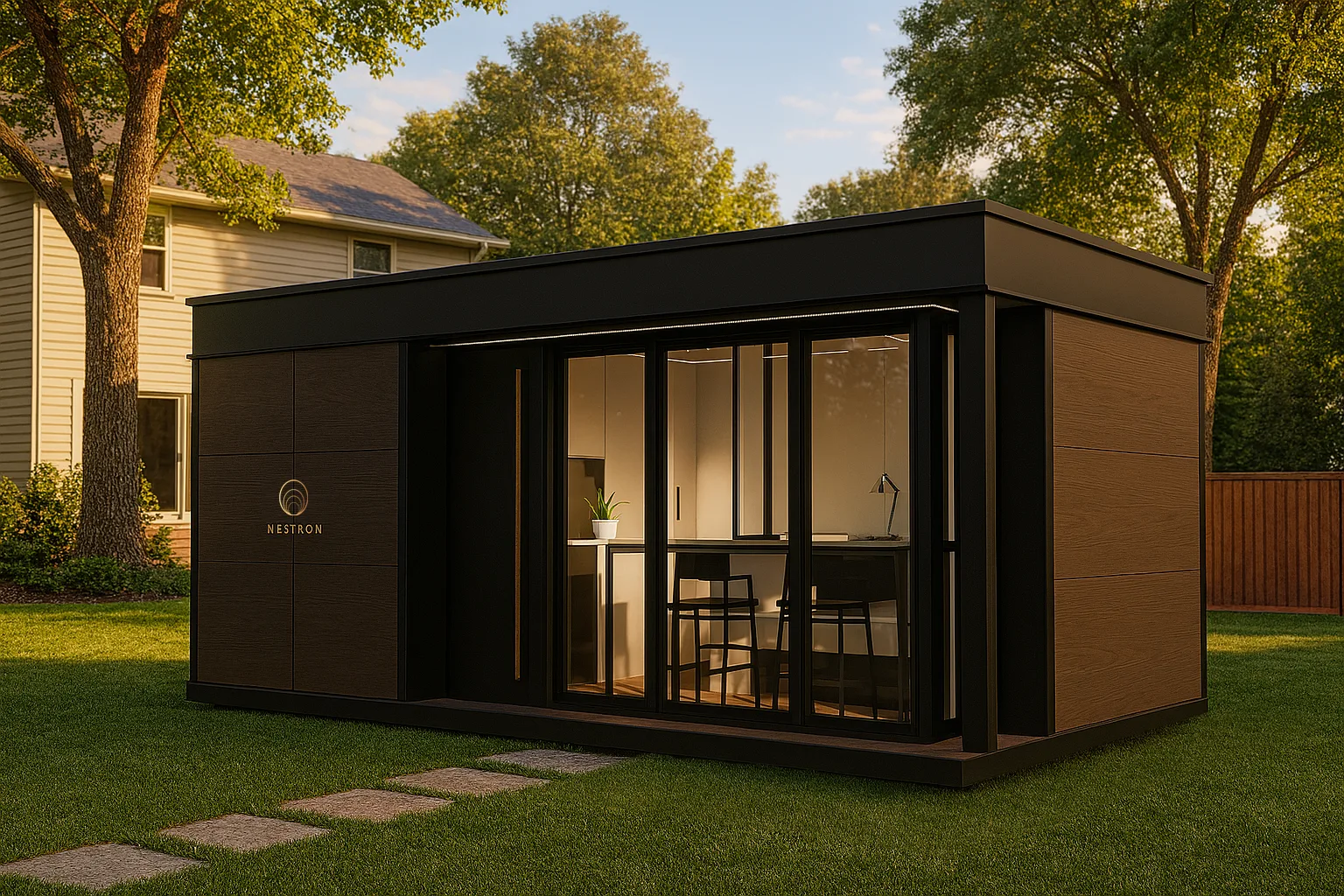
Keep everyone close without uprooting anyone, at a fraction of what assisted living costs.
By Nestron · June 16, 2026 · 4 min read
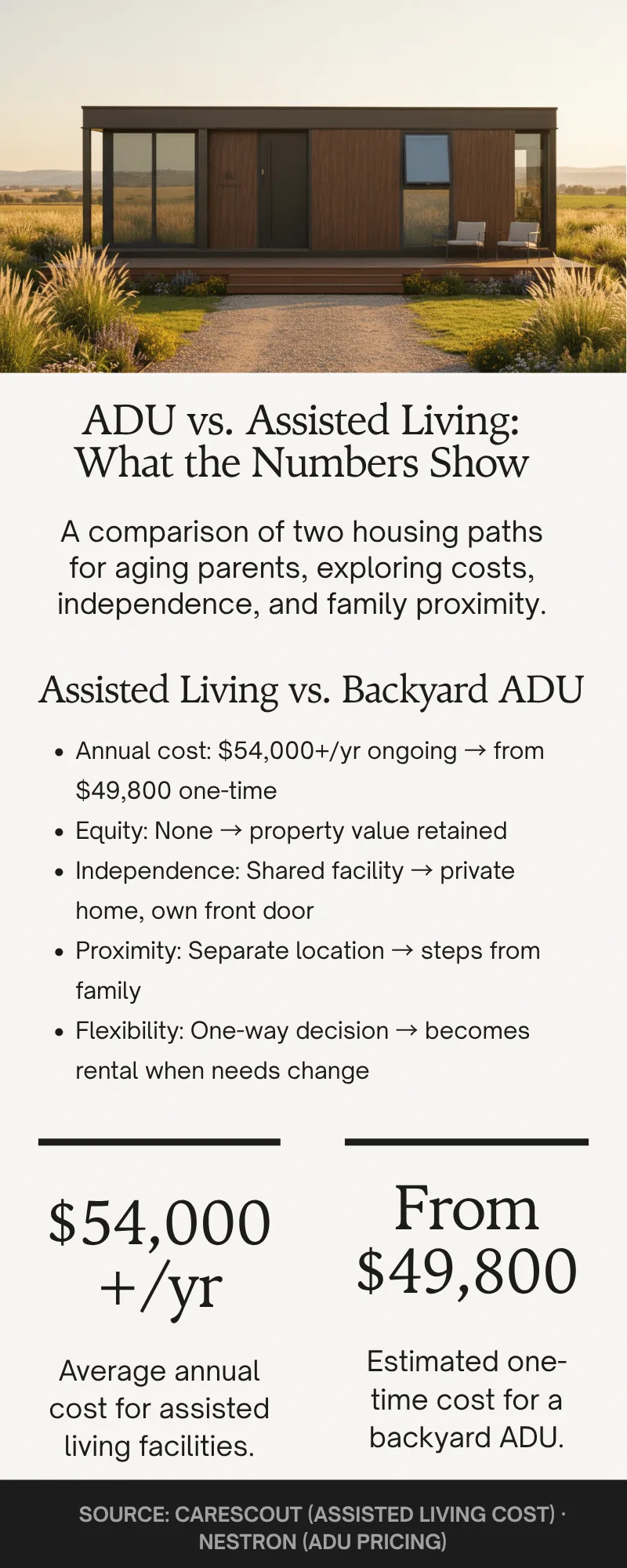
The average cost of assisted living in the United States now exceeds $54,000 per year, and that number keeps climbing. However, for families trying to relocate aging parents with ADUs, the numbers often tell a completely different story. A backyard unit on an existing property can bring a parent within steps of family support, preserve their independence, and cost a fraction of what a care facility charges over time. Nobody has to sell their home, leave their city, or give up their privacy.
Why ADUs are replacing the nursing home conversation
An accessory dwelling unit (ADU) is a self-contained residential structure built on the same property as a primary home. It has its own entrance, kitchen, bathroom, and sleeping area: everything a person needs to live independently while remaining close to family.
The role of ADUs in solving multigenerational housing needs has grown as more families look for alternatives to institutional care. For families with aging parents, this setup solves a problem that neither a shared bedroom nor a facility can: proximity without the loss of autonomy. A parent living in a backyard ADU can have dinner with family every evening and still close their own front door at night.
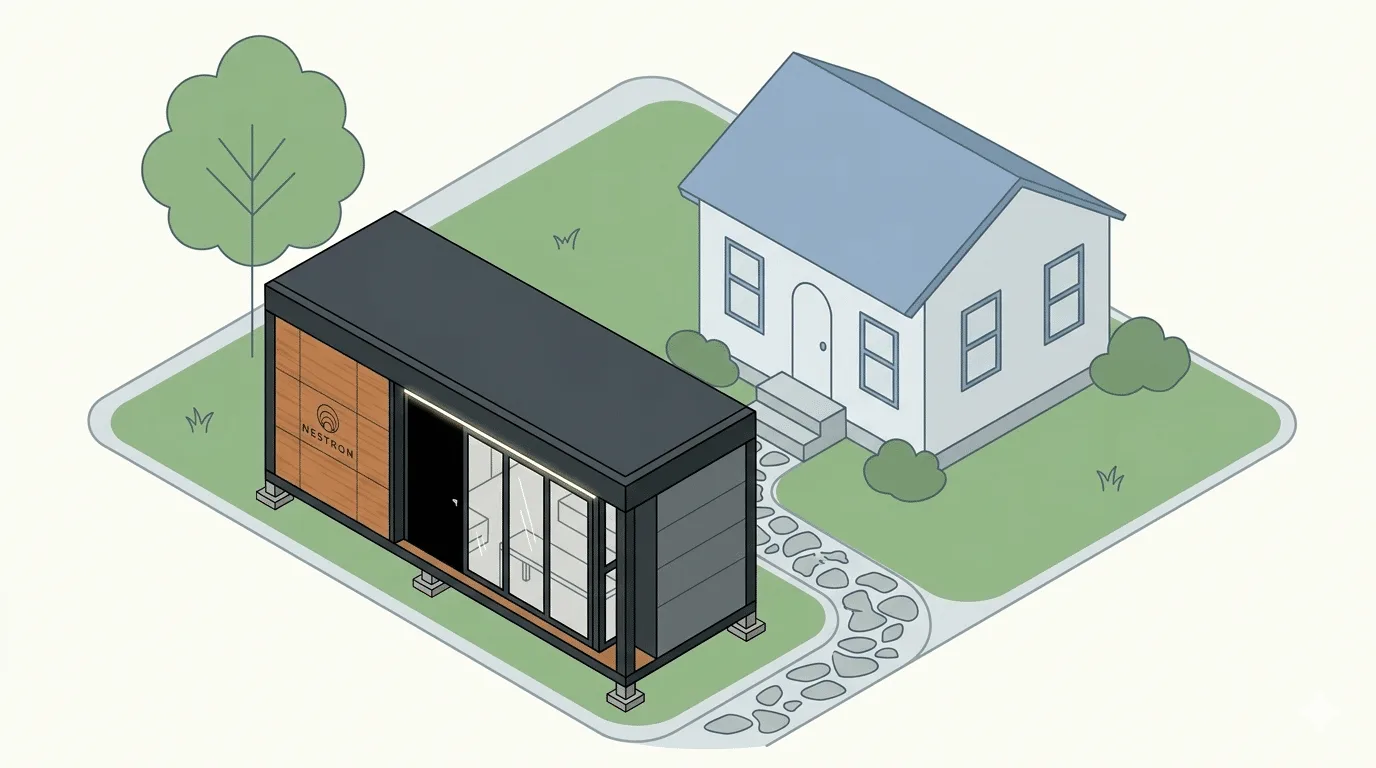
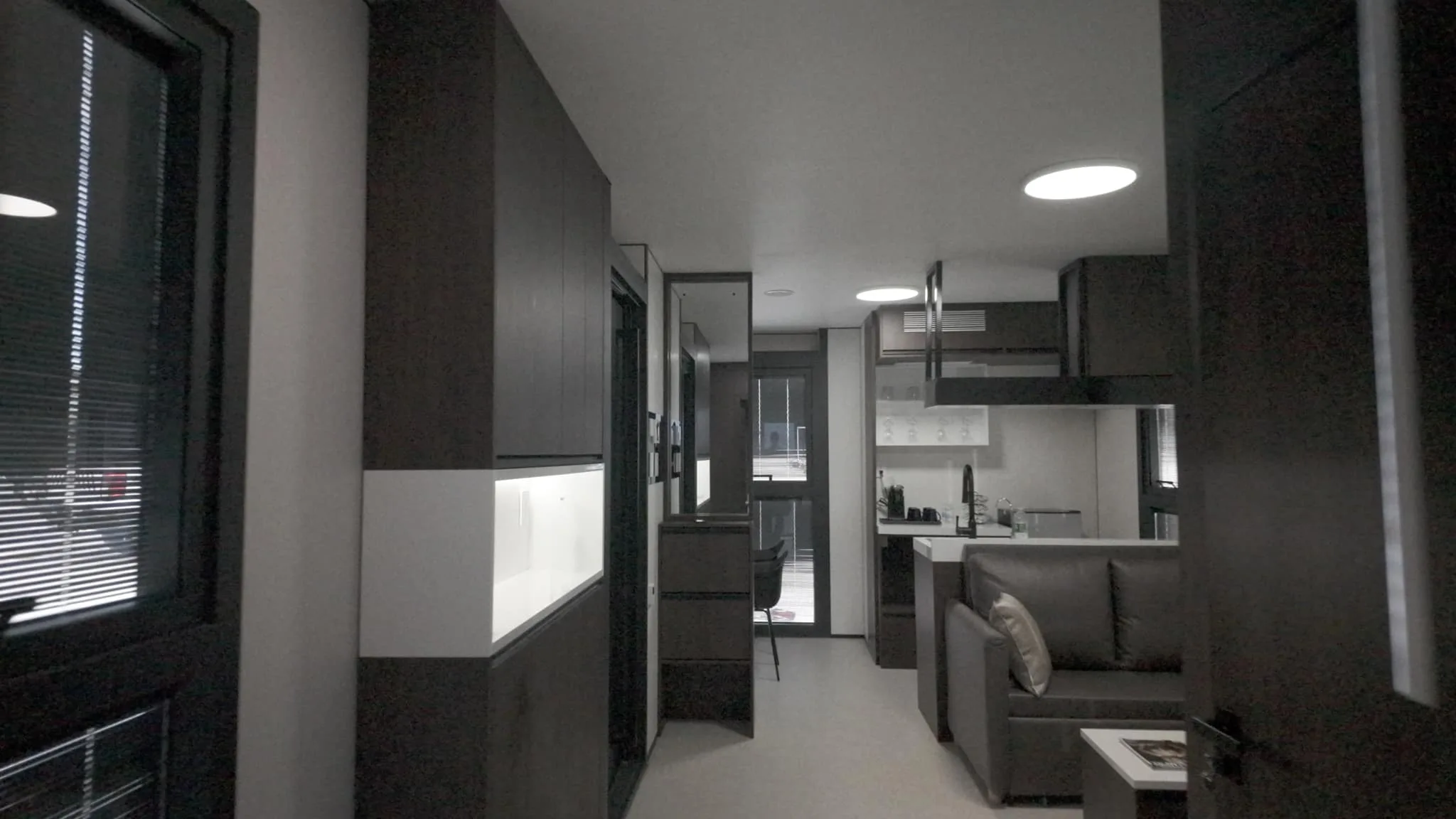
Nestron designs for exactly this: wider doorways, step-free entries, and flexible layouts that work equally well for aging adults and younger renters if circumstances change later.
What does the move look like?
Moving a parent into an ADU involves two parallel tracks: building or placing the unit, and coordinating the physical relocation. The second part is where many families underestimate the effort involved.
A parent downsizing from a longtime family home often has decades of accumulated belongings. The move is as emotional as it is logistical. Deciding what comes with them, what goes to other family members, and what gets donated requires time and patience. Ready 2 Roll Moving has found that families who plan the move in phases, starting weeks before the actual moving day, experience far less stress and fewer last-minute decisions.
The physical setup of the ADU matters too. Think through accessibility before the parent arrives: grab bars in the bathroom, good lighting in hallways, lever-style door handles instead of knobs. These details make a real difference for someone in their 70s or 80s.
It also helps to involve the parent in decisions about the space early. Letting them choose finishes, furniture placement, or small customizations gives them ownership over the transition. What might otherwise feel like being “moved” becomes something they helped design.
How to finance an ADU for a parent without breaking the budget
Cost is the first concern for most families, and it’s a reasonable one. A prefab ADU from Nestron starts at a lower price point than site-built construction, and the timeline is shorter. Where a traditional build can take 12 to 18 months and involve unpredictable contractor costs, a factory-built unit like the Legend One or Legend Two arrives with a fixed price and a defined delivery schedule.
Financing options have expanded. Nestron works with trusted financing partners to connect clients with loan products built specifically for modular and ADU projects. How to finance an ADU without overextending your budget is worth reading before any family commits to a number, because the right structure can make a meaningful difference in monthly payment size.
In many cases, families split the cost between adult siblings, which lowers the individual burden substantially. Some also factor in what they stop paying: eliminating a parent’s separate rent or mortgage payment can offset a significant portion of the ADU financing cost within the first year. Over a two-to-three-year horizon, the avoided costs of separate housing and care often exceed the ADU financing payments.
What happens to the ADU when circumstances change?
One of the strongest arguments for choosing an ADU over a facility is flexibility. A care facility is a one-way door. An ADU is an asset that continues to serve the family regardless of what life brings.
If a parent passes away or eventually requires higher-level care, the unit doesn’t sit empty as a liability; it becomes a rental property. Backyard ADUs can create passive rental income for homeowners, housing a parent now, renting to a tenant later, and building long-term property value throughout.
Nestron’s design philosophy accounts for this dual-use potential. Our models are built to residential standards, not as temporary structures, which means they age well on the property and appeal to future tenants or buyers just as they do to family members moving in now.
The smartest move doesn’t require anyone to leave
Families who use ADUs to keep aging parents close are solving a problem that money alone can’t fix; they’re preserving both connection and independence at the same time. To relocate aging parents with ADUs is to make a decision that works today and remains flexible for whatever comes next.
The financial case is just as strong. Freddie Mac’s research on ADU property value shows that homes with ADUs tend to attract more qualified buyers and sell at higher prices, so the unit serving a parent today strengthens the property’s long-term position too.
If your property has the space and your family is ready to explore the option, start with a complimentary consultation. Nestron’s team can walk through site requirements, model options, financing pathways, and realistic timelines, at no cost, and without pressure. The conversation is the first step toward a solution that serves your whole family.